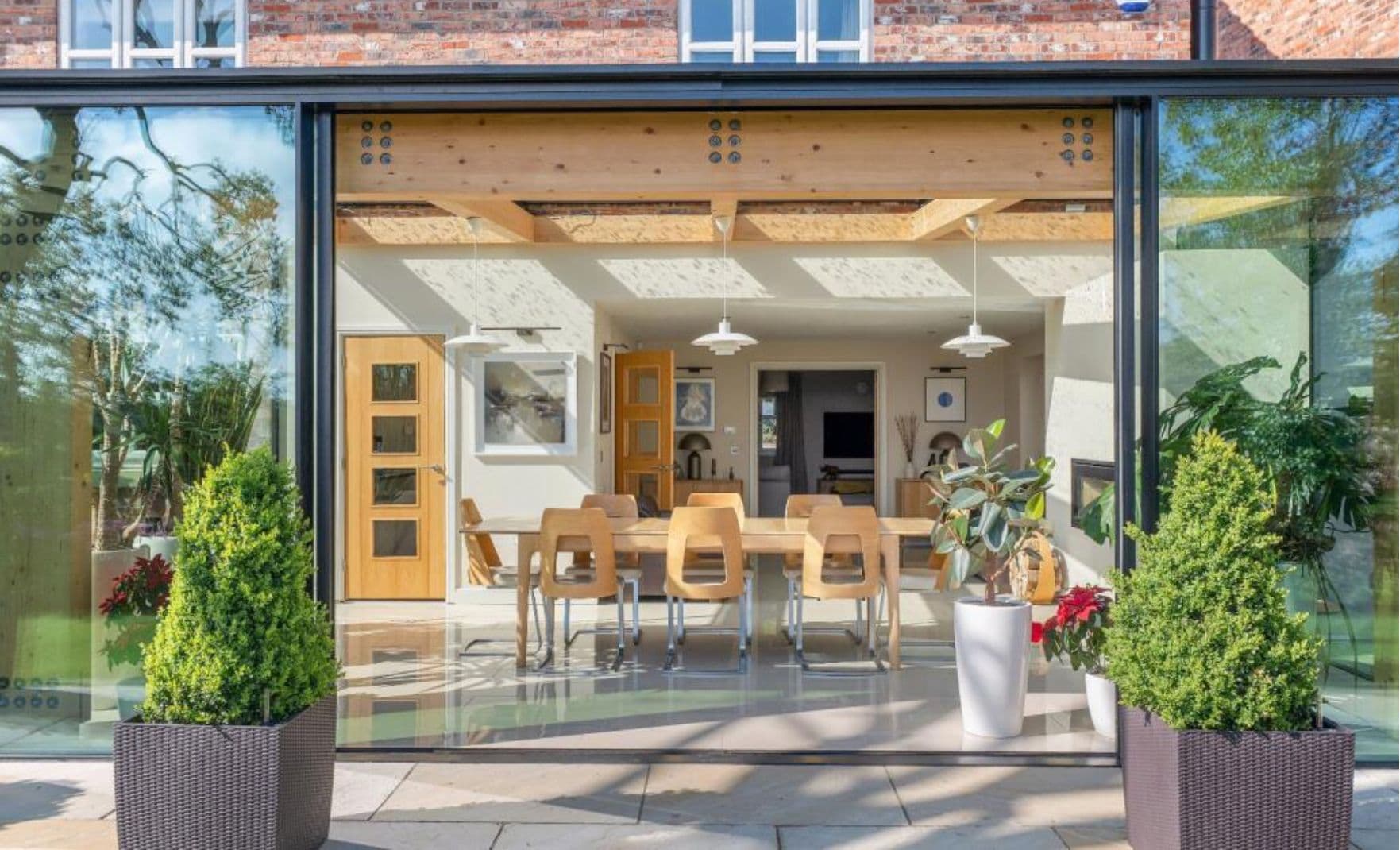
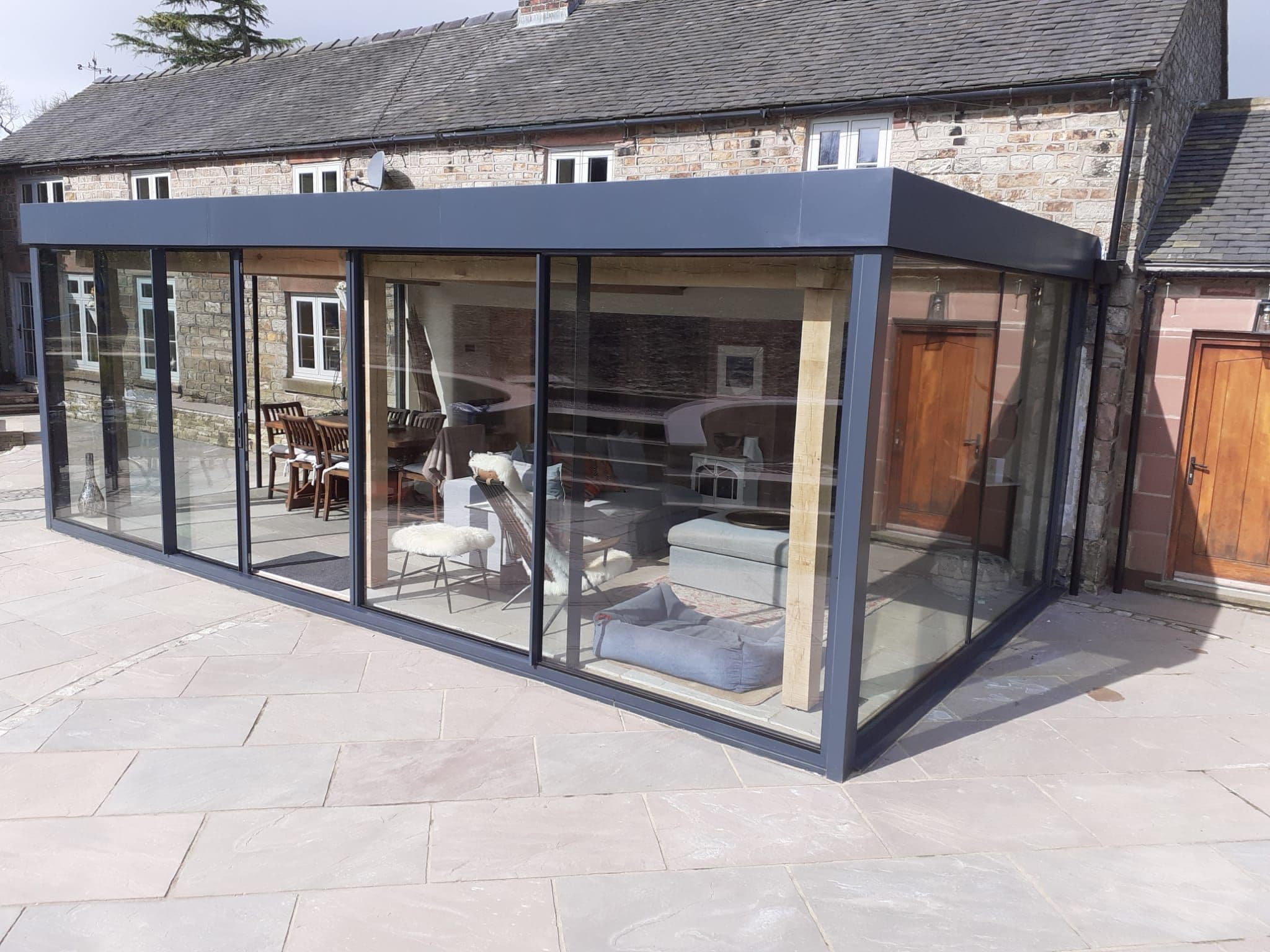
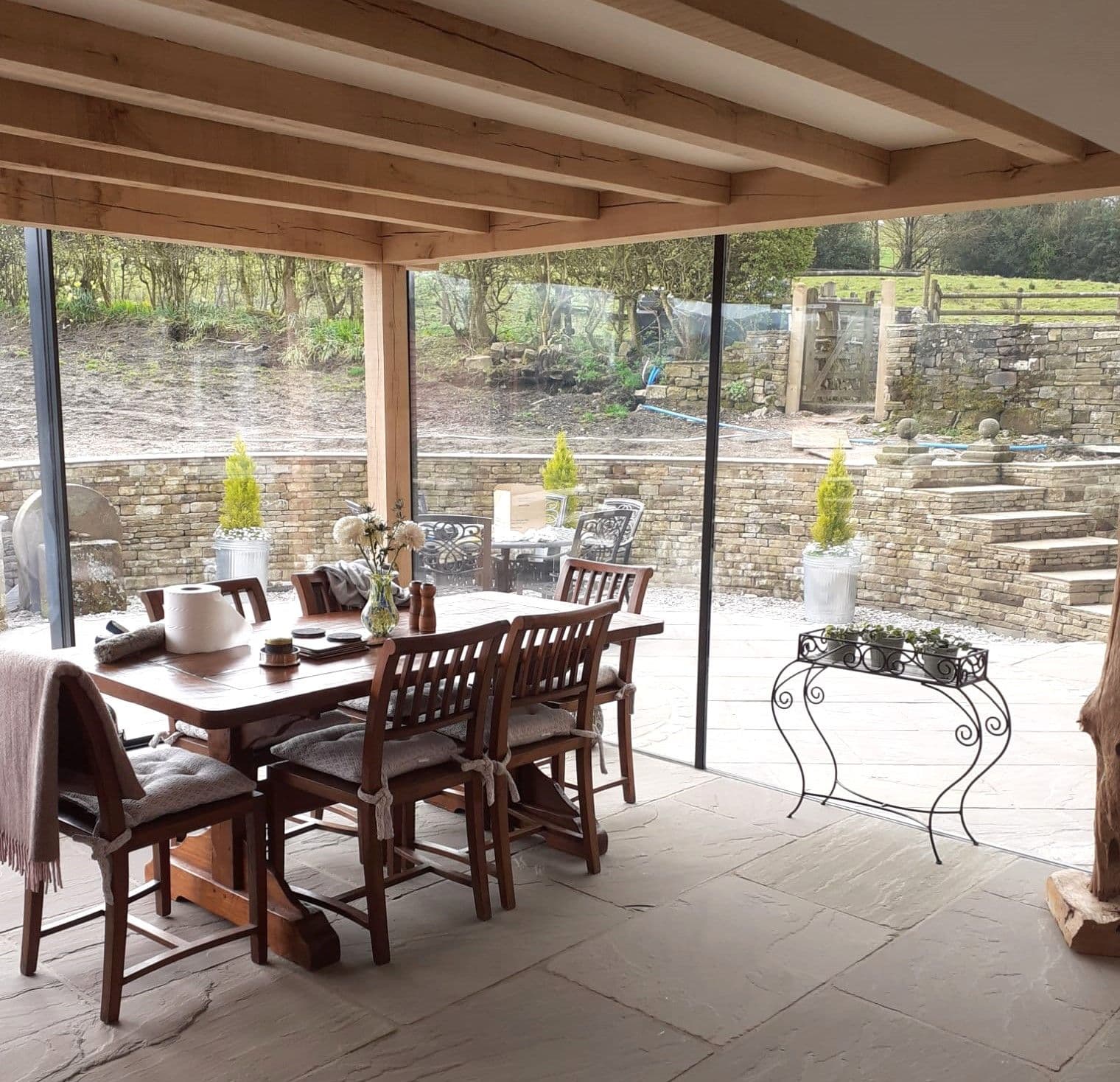
Glass Links are a perfect way to seamlessly join two building and create a space that can be enjoyed all year round.
Glass Link
Glass links between two buildings
A glass link is a glazed connection that joins two separate structures into one usable home. It might tie a main house to a garage, an outbuilding, an annexe, or a newer wing, giving you a dry, light-filled route between spaces that were never designed to meet.
The appeal of a glass link between buildings is that it does its job almost invisibly. Slim framing and large panes keep sightlines clear, so the two original buildings stay the heroes and the connection reads as a quiet pause between them. You see the brickwork, the stone, the roofline — and you walk between them in comfort.
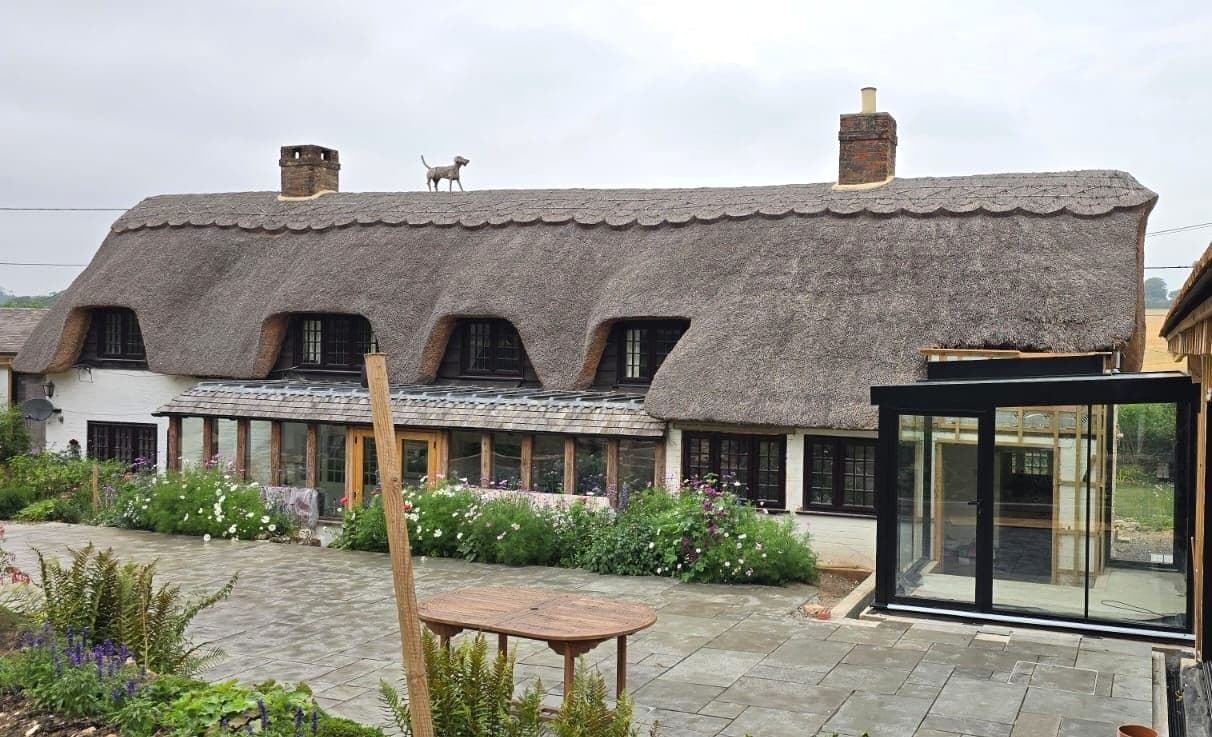
Glass link extensions and period or listed properties
A glass link extension works particularly well on older homes because it adds space without competing with the original architecture. Rather than bolting a matching extension onto a period façade, a glazed link sits lightly against the old wall and lets it carry on being seen.
On listed and heritage properties this is often the difference between a scheme that gains consent and one that doesn’t. A reversible, clearly modern glazed connection that touches the historic fabric minimally is usually easier to justify to a conservation officer than a solid addition that imitates the original. We explain the heritage approach in Glass Link for Listed Buildings, and How a Glass Corridor Can Add Value to Your Home is worth a read if you’re weighing up the return.
Every link we build is made to measure for the two buildings it joins — survey, framing, glass specification and structural support are all worked out for that specific gap. If you’re comparing options, our wider glazing products and built projects show how the same detailing carries across extensions, corridors and entrances.
What we consider when designing your glass link
✔
The character and condition of both buildings, so the link complements rather than competes
✔
How the structure is supported — minimal steel or slim framing to keep glass loads safe
✔
Thermal performance and solar control to keep the link comfortable through the seasons
✔
Any level changes, drainage and weathering where the glass meets old masonry
✔
Reversibility and a light touch on historic fabric for listed or conservation-area homes
✔
How the link is used day to day — a walkway, a seating spot, or a room in its own right
Glass link FAQs
It depends on the property and its location. Many glass links fall within permitted development, but listed buildings, conservation areas and larger schemes usually need full consent. We’ll talk you through the likely route for your home before any design work begins.
Bespoke glass links
Connect your buildings with light
Tell us about the two spaces you’d like to join and we’ll design a glass link made to measure for them.