Glass Link for Listed Buildings – Elegant Connections That Respect Heritage
Bespoke glass links for listed buildings and barn conversions. James Price Bespoke Glazing supports planning, building regs and precision installation.
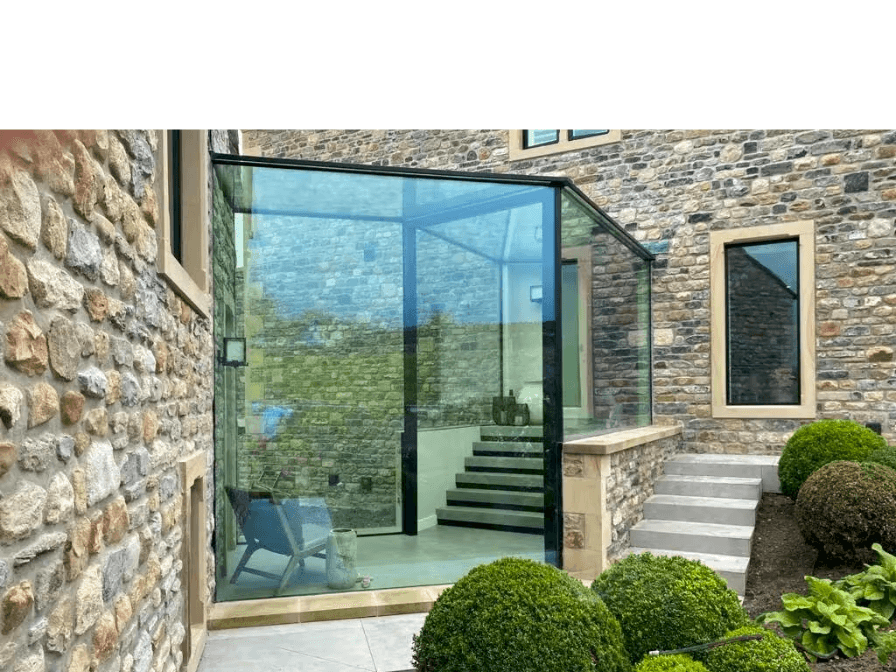
A glass link for a listed building (also commonly called a glass corridor) is one of the most sensitive and effective ways to extend, connect, or reconfigure historic properties. When designed correctly, a glass link provides a clear physical connection between old and new structures while maintaining a clear visual separation that planning authorities and conservation officers actively encourage.
At James Price Bespoke Glazing, we specialise in the design, planning support, and installation of high-end bespoke glass links for listed buildings, period homes, and barn conversions across the UK. Our approach combines architectural restraint, technical precision, and a deep understanding of planning and building regulations.
What Is a Glass Link (Glass Corridor)?
A glass link is a narrow glazed structure that connects two buildings or links an extension to an existing property. In listed buildings, this is often preferred over traditional masonry extensions because:
- It visually separates historic fabric from new construction
- It preserves the original building’s character
- It is lightweight and reversible in design terms
- It allows the old building to remain dominant
Glass links are also known as:
- Glazed walkways
- Glass Corridors
- Glass connectors
- Heritage glass links
Why Glass Links Are Ideal for Listed Buildings
Planning authorities typically favour glass links for listed buildings because they are subordinate and respectful. Rather than attempting to copy historic architecture, a glass link is intentionally modern and minimal, clearly showing what is original and what is new.
Key Benefits:
- ✅ Minimal visual impact on heritage elevations
- ✅ Increased natural light
- ✅ Clear distinction between old and new
- ✅ Improved circulation and usability
- ✅ Elegant architectural statement
When executed correctly, a glass link can actually enhance the appreciation of the original building rather than detract from it.
Glass Links for Barn Conversions
Glass links are particularly popular for barn conversions, where planners often require new living accommodation to be separated from the original agricultural structure.
Common applications include:
- Linking a converted barn to a new residential wing
- Connecting a barn to an existing farmhouse
- Creating a glazed hallway between two converted outbuildings
A glass corridor allows the barn to retain its agricultural identity while still functioning as part of a modern home.
Planning Permission for Glass Links on Listed Buildings
If your property is listed, Listed Building Consent is required, and often planning permission as well. This is where many projects fail — not because the idea is wrong, but because the proposal lacks sensitivity or technical clarity.
How James Price Bespoke Glazing Helps
We regularly support projects from early concept through to approval, working alongside:
- Architects
- Planning consultants
- Conservation officers
- Structural engineers
Our involvement includes:
- Concept design advice
- Heritage-sensitive detailing
- Glass specification suited to conservation areas
- Supporting drawings and technical input
- Responses to planner and conservation feedback
Our experience means we understand what planners are looking for and how to present a glass link proposal that stands the best chance of approval.
Building Regulations & Technical Compliance
A common misconception is that glass links are simple structures. In reality, they must comply fully with UK Building Regulations, including:
- Part A – Structure
- Part B – Fire safety
- Part L – Thermal performance
- Part K – Safety glazing
- Part M – Accessibility (where applicable)
At James Price Bespoke Glazing, we design glass links that meet or exceed regulatory requirements while maintaining ultra-slim aesthetics.
Key Technical Considerations:
- Structural glass walls and roofs
- Thermal breaks and condensation control
- High-performance double or triple glazing
- Solar control glass options
- Drainage and ventilation design
We liaise closely with building control to ensure a smooth approval process.
Design Considerations for Heritage Glass Links
A successful glass link should feel almost invisible. Our design philosophy focuses on:
- Minimal framing
- Flush thresholds
- Hidden fixings
- Clean junctions to existing stone or brickwork
We often specify:
- Structural glass fins
- Frameless or slimline aluminium systems
- Low-iron glass for maximum clarity
- Neutral silicone joints
The result is a contemporary insertion that complements — rather than competes with — historic architecture.
Why Choose James Price Bespoke Glazing?
We are not a standard glazing supplier. We are specialists in high-end, oversized, and bespoke glazing solutions, with extensive experience in heritage and listed building projects.
What Sets Us Apart:
- Bespoke design, not off-the-shelf systems
- Experience with listed buildings and conservation areas
- End-to-end support: design, planning, fabrication, installation
- Precision installation by our in-house team
- UK-based expertise with nationwide coverage
Every glass link we deliver is tailored to the building, the planning context, and the client’s vision.
Frequently Asked Questions (FAQs)
Do glass links get approved on listed buildings?
Yes, when designed sensitively. Planning authorities often prefer glass links because they clearly distinguish new additions from historic fabric.
Are glass links energy efficient?
Modern glass links use high-performance glazing, thermal breaks, and solar control coatings to meet building regulations.
Can a glass link connect two separate buildings?
Absolutely. Glass corridors are ideal for linking barns, outbuildings, annexes, and main houses.
Is listed building consent required?
Yes. Any alteration affecting a listed building requires listed building consent.
How long does planning approval take?
Typically 8–12 weeks, though listed building applications can take longer depending on complexity.
Questions & Answers
Q: Will a glass link damage the original building?
A: No. When designed correctly, glass links use minimal fixing points and are often reversible.
Q: Can the glass link be heated?
A: Yes. Underfloor heating and slimline heating solutions are commonly integrated.
Q: Can you help before an architect is appointed?
A: Yes. We often provide early-stage advice to help shape a planning-friendly concept.
Related Content
Discover more content related to this blog

Glass rooms, your options to get the perfect glass space to use all year round

Glass Corridors: A Modern Architectural Solution for Connecting Buildings
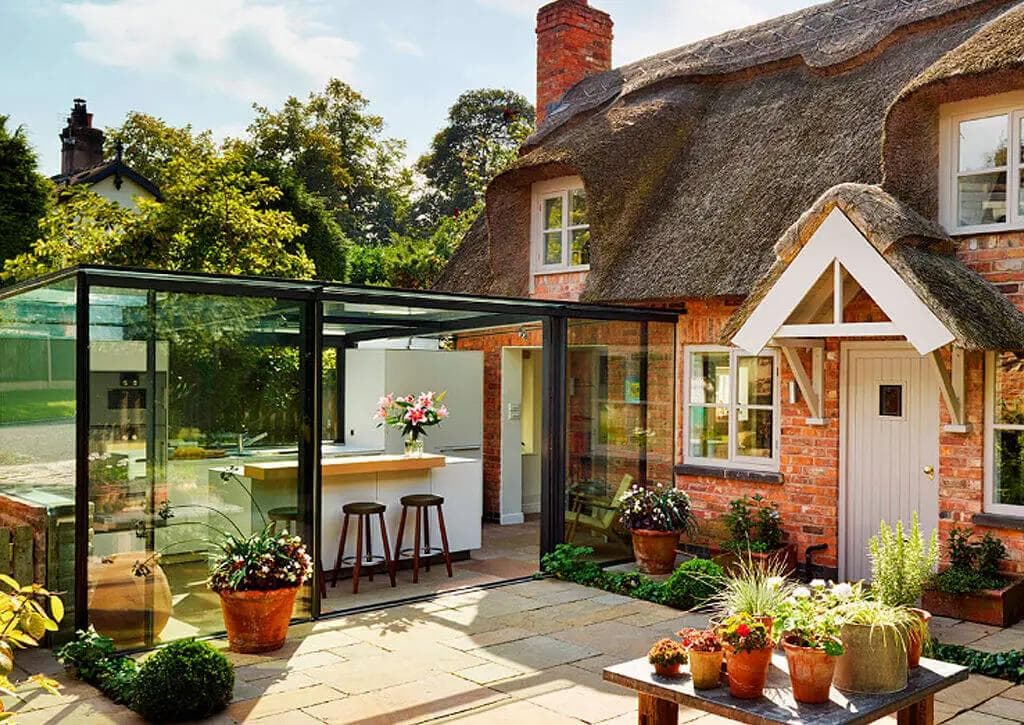
Costs, Warmth, Planning, and Real-World Tips for your perfcect Glass Extension

Glass Links are a perfect way to seamlessly join two building and create a space that can be enjoyed all year round.

Glass corridors — often called glass links — have become one of the most desirable architectural features in modern UK homes.

In recent years, glass rooms have rapidly evolved from a luxury addition to a mainstream aspiration for UK homeowners.