Heating a Glass Extension: UFH, Heat Pumps and Smart Control
A practical guide to heating a glass room: underfloor heating, heat pumps, zoning and simple ways to keep running costs under control in UK homes.
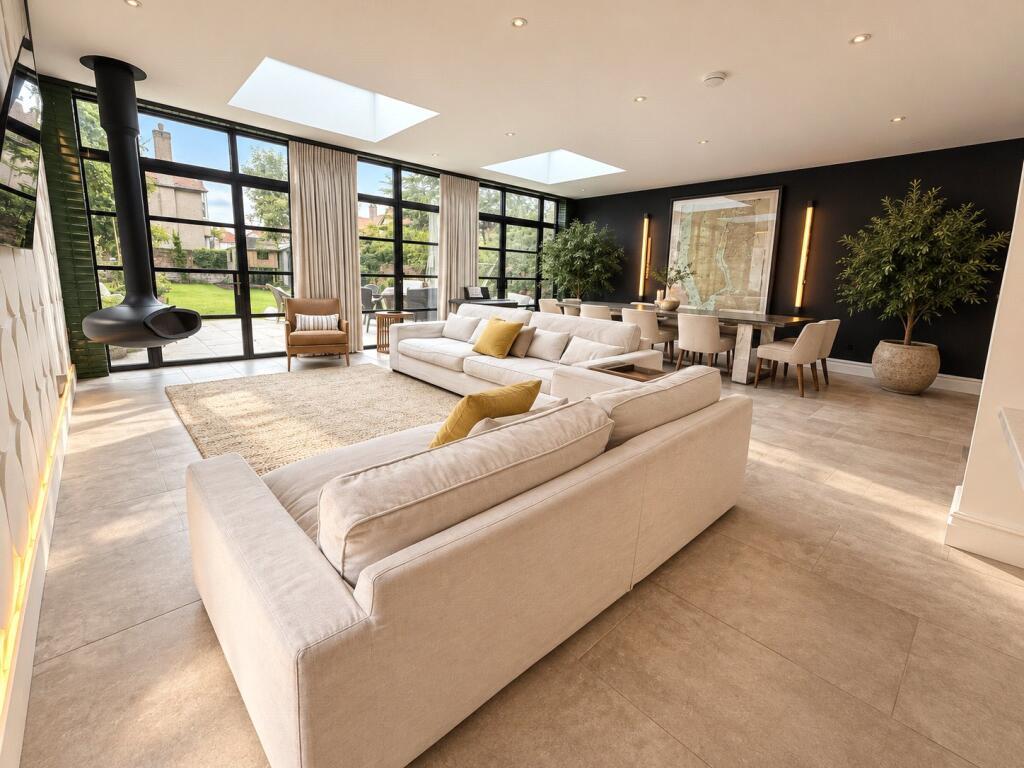
Heating a glass extension: what works and how to keep costs sensible
If you’re planning a glass box, link or garden room, the first question is often the same: are glass extensions cold? The short answer is no — with the right glazing spec and a thought‑through heating plan, they’re comfortable year‑round. This article looks at practical heating options, how to zone a glass room, and simple steps to keep running costs down.
It follows on from our pieces on Are Glass Box Extensions Cold and thermal performance within our broader Glass Extensions: A Complete Guide for UK Homeowners.
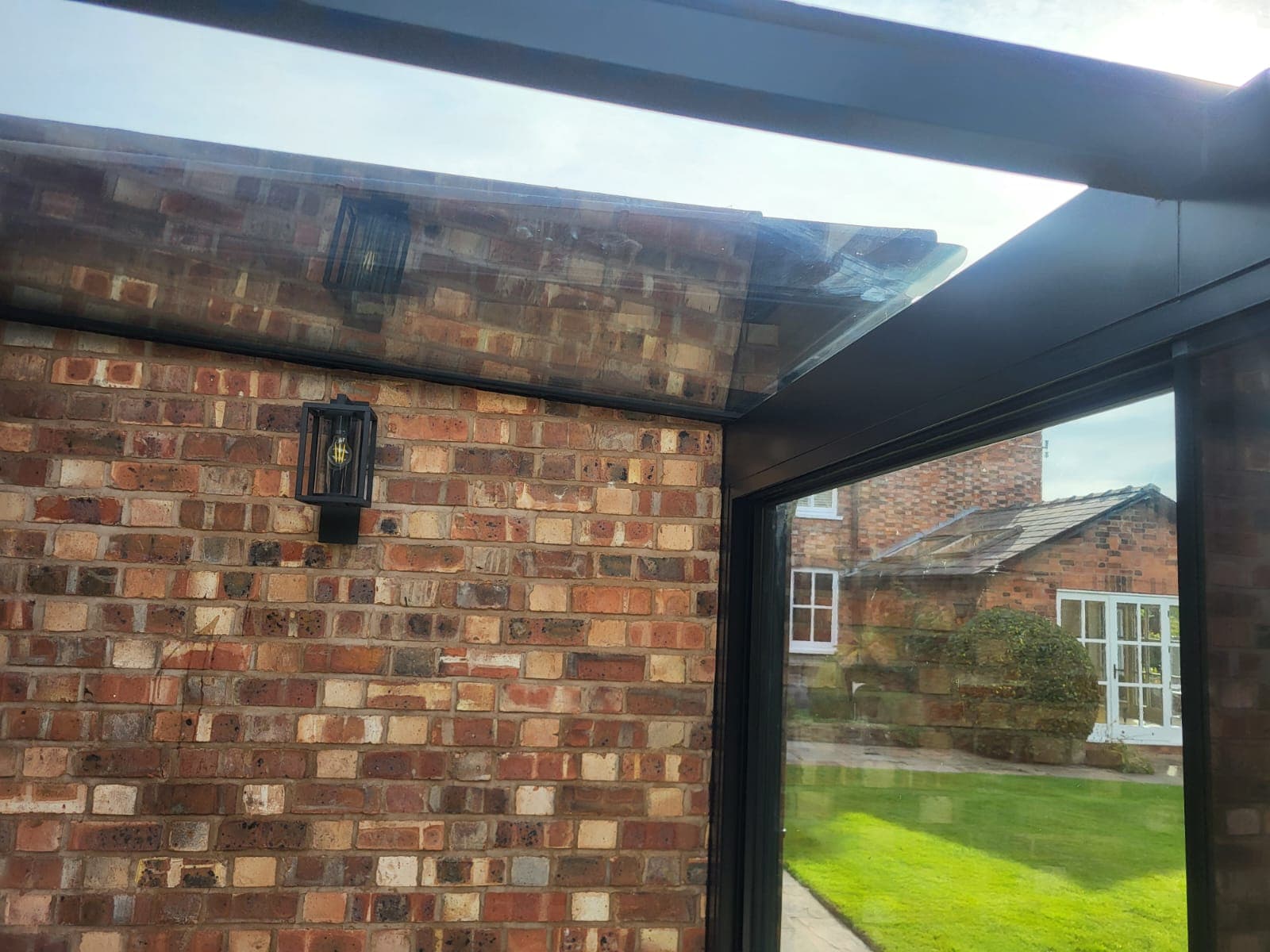
Start with the envelope and a realistic brief
Heating performance starts with the glass. Modern structural glazing uses high‑performance double or triple glazing, warm‑edge spacers and thermally broken frames. In the North West (Cheshire, Merseyside, Lancashire and Greater Manchester), we design glass rooms that stay comfortable in winter and manage solar gain in summer with orientation‑led design, coatings and shading.
A clear brief helps. Decide whether the space should match the main home’s temperature 24/7, or work as a separately heated zone that you warm when occupied. The answer drives the system choice, controls and running costs.
See examples in our Projects and regional guides like Glass Extensions Cheshire.
Underfloor heating in a glass room: steady, comfortable heat
Underfloor heating (UFH) suits glass extensions because it provides even heat at low flow temperatures and frees wall space.
Hydronic UFH: what to think about
- Floor build‑up and finishes: tile, stone and LVT pass heat well; thick timber can slow output.
- Insulation and edge detailing: insulate the slab and the perimeter to reduce heat loss to ground and outside edges.
- Manifold and zoning: treat the glass room as its own zone with a dedicated thermostat and, ideally, a floor sensor to cap surface temperature.
- Warm‑up and cool‑down times: a screed has thermal mass. It’s excellent for steady background heat, less so for rapid changes. Pair it with smart scheduling.
Electric UFH: where it fits
Electric underfloor mats can work for smaller links or as a comfort “topper” under tile, especially where water UFH isn’t practical. They’re simple to install but should be specified with realistic run profiles and proper insulation beneath.
You can learn more about our structural glazing approach on our Products pages and recent Case Studies.
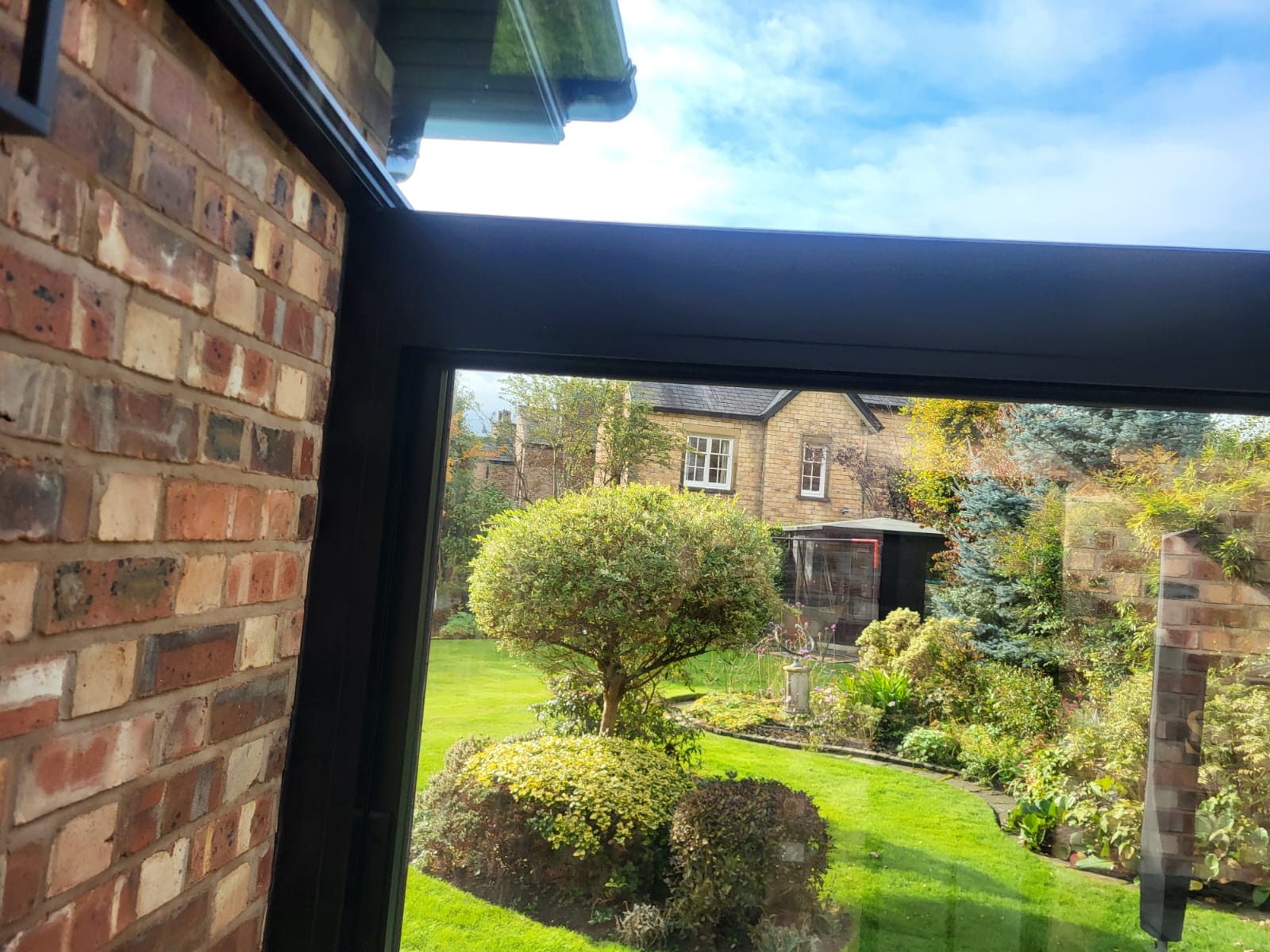
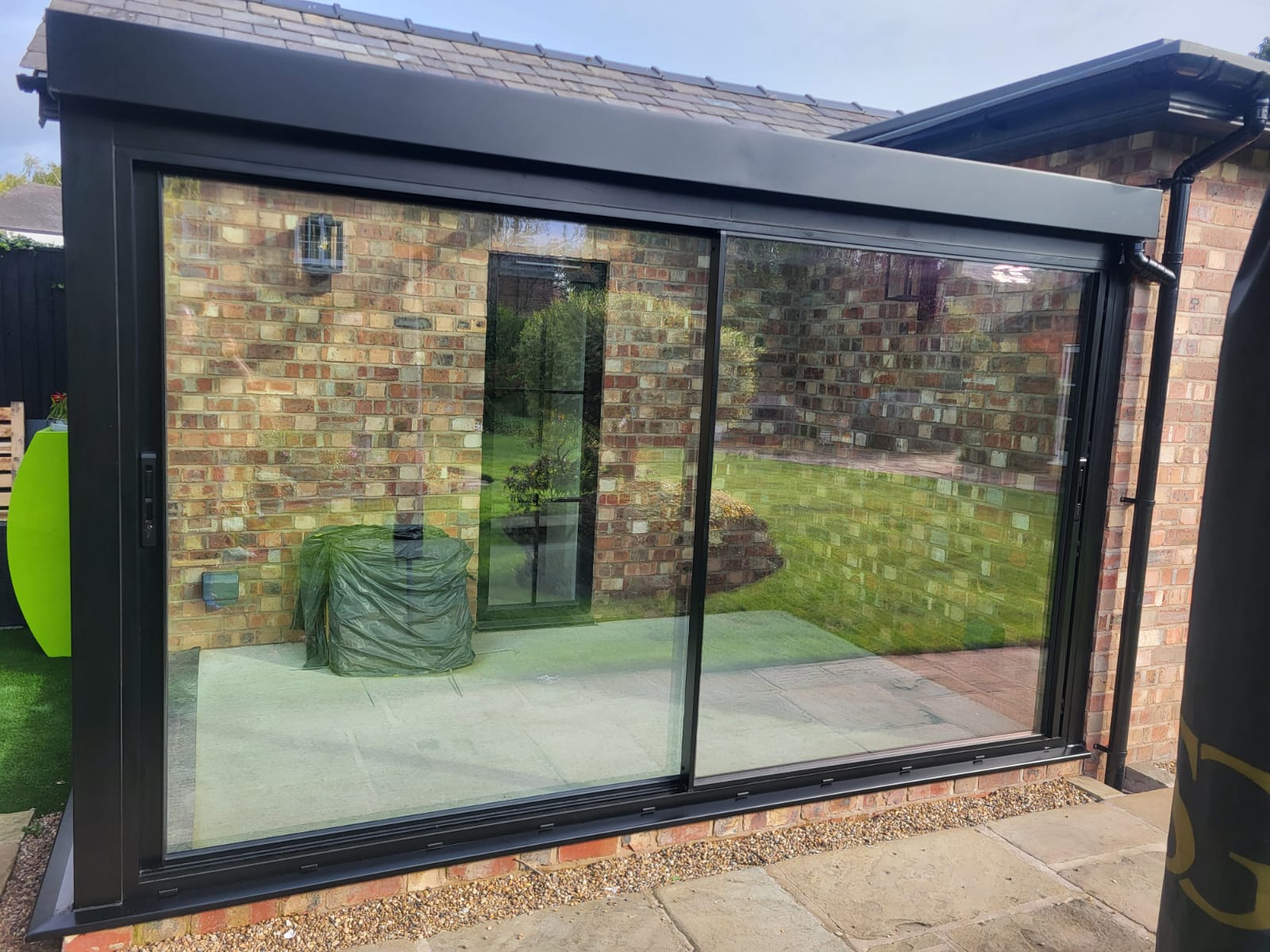
Heat pumps and glass extensions
Heat pumps pair naturally with UFH because both like lower water temperatures. The key is design:
- Output and weather data: size the system for the space and local climate. In our region we consider exposure and orientation (open sites in Cheshire’s countryside behave differently to sheltered urban gardens in Manchester).
- Flow temperatures: keep them as low as practical — that’s where heat pumps are most efficient. This favours slab‑based UFH over small radiators.
- Controls and zoning: give the glass room its own zone. Use thermostats that can respond to solar gain so you don’t “fight the sun”.
- Integration: if the main house is radiator‑led, a mixed system is possible — UFH in the glass room, radiators elsewhere — with careful hydraulic design.
Speak to your M&E designer early; we’re happy to coordinate set‑out, thresholds and floor build‑ups so glazing and heating work together. Our Glass Box Extensions and Modern Glass Box Extension pages show typical build‑ups and junctions.
Simple ways to keep running costs down
- ✔
Specify high‑performance glazing and thermally broken frames from the outset.
- ✔
Treat the glass room as its own heating zone with accurate controls.
- ✔
Use UFH with proper slab and perimeter insulation to cut losses.
- ✔
Plan shading (coatings, blinds, overhangs) to manage summer gains and shoulder‑season heat.
- ✔
Set realistic schedules: background heat for steady use; deeper set‑backs for occasional spaces.
- ✔
Seal air paths at thresholds and interfaces to reduce draughts.
- ✔
Consider MVHR or background ventilation for clear air without excessive heat loss.
- ✔
Monitor: a couple of temperature/humidity sensors help you tune settings.
Supplementary heat sources: when and why
Even with UFH, you may want a quick “top‑up” on very cold mornings or when you first enter the room.
- Trench convectors: slim, floor‑level convectors by full‑height glazing wash warm air up the glass and help with downdraughts on exposed sites.
- Low‑profile radiators: useful if floor build‑up is limited. Choose models sized for lower flow temperatures.
- Electric “boost” options: a small convector or electric UFH zone under a seating area provides fast response without over‑heating the whole slab.
- Stoves: a feature stove can work, subject to Building Regulations and ventilation; consider air quality and flue routing early.
- Air movement: a discreet ceiling fan can gently destratify warm air that collects high up in double‑height spaces.
Controls and zoning that actually work
Glass rooms behave differently through the day: cool early, free heat from the sun later. Good controls make the most of that.
Practical tips
- Use a dedicated thermostat for the glass room and a floor probe with UFH to avoid over‑hot surfaces in sunny spells.
- If using a heat pump, enable weather compensation so flow temperatures fall on milder days.
- For occasional rooms, schedule a pre‑heat before use rather than running at high set‑points all day.
- Keep thresholds and door lines tight. Small air leaks can undo good heating design.
For ideas and precedents, explore our Case Studies and regional pages for Glass Extensions Lancashire and Glass Extensions Cumbria & the Lake District.
Heating a glass extension — FAQs
Not when they’re designed well. High‑performance glazing, proper detailing and the right heating strategy keep a glass room comfortable through a North West winter.
Ready to talk details?
Let’s design the glass — and the heating — together
We work across Cheshire, Merseyside, Lancashire and the wider North West, coordinating glazing, thresholds and heating so your glass room is comfortable year‑round. Contact us to discuss your plans or send drawings.