Glass Extensions: A Complete Guide for UK Homeowners
From frameless glass boxes to glazed links and slim-framed garden rooms, here's how to choose, specify, and plan a glass extension for your home.
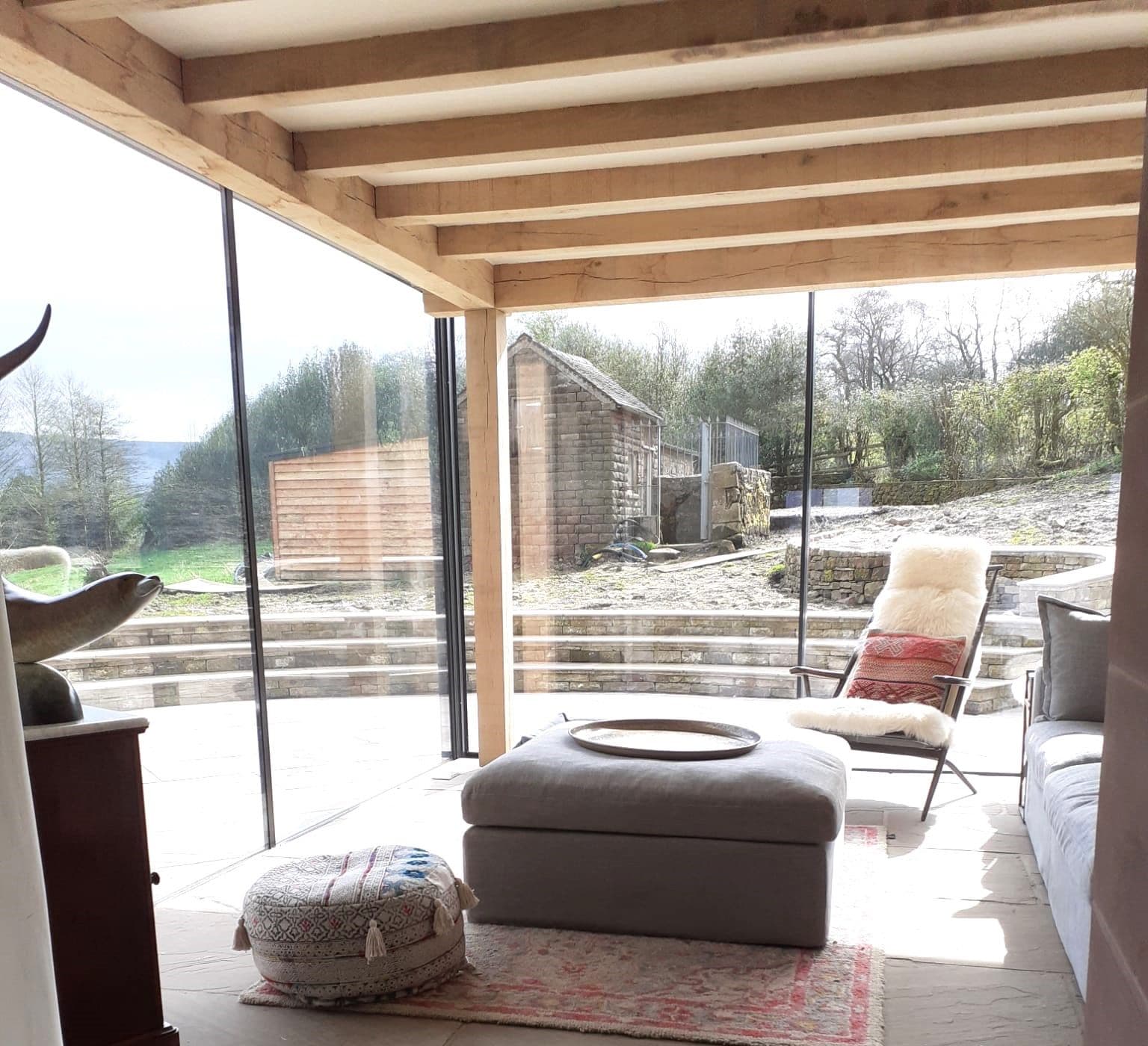
Glass extensions: a complete guide for UK homeowners
A glass extension changes how you live in your home. Light reaches further into the house, the garden feels like part of the kitchen, and a once-dark rear becomes the room everyone gravitates towards. Whether you are after a frameless glass box off the kitchen, a glazed link between an old barn and a new wing, or a contemporary glass extension with slim sliding doors, the choices you make early on shape the result for decades.
This guide walks you through the main types of glass extensions for houses, how framed and frameless designs differ, what affects glazing performance, and what to expect from first sketch to handover. We build these across the North West and beyond, so the advice here comes from real projects rather than brochures. We have kept it practical, with no invented prices or specifications.
What we mean by a glass extension
A glass extension is any addition to a house where glass does most of the work — walls, roof, or both. Some are almost entirely glazed, like a frameless glass box that reads as a single transparent volume. Others combine large glazed openings with solid elements, giving you more wall for furniture and services while still flooding the room with light.
The right balance depends on your house, the orientation, and how you want to use the space. A south-facing garden room wants careful shading; a north-facing link can be almost all glass without overheating.

Framed vs frameless glass extensions
The biggest design decision is how much you want to see the glass — and how little you want to see anything else.
Frameless glass extensions
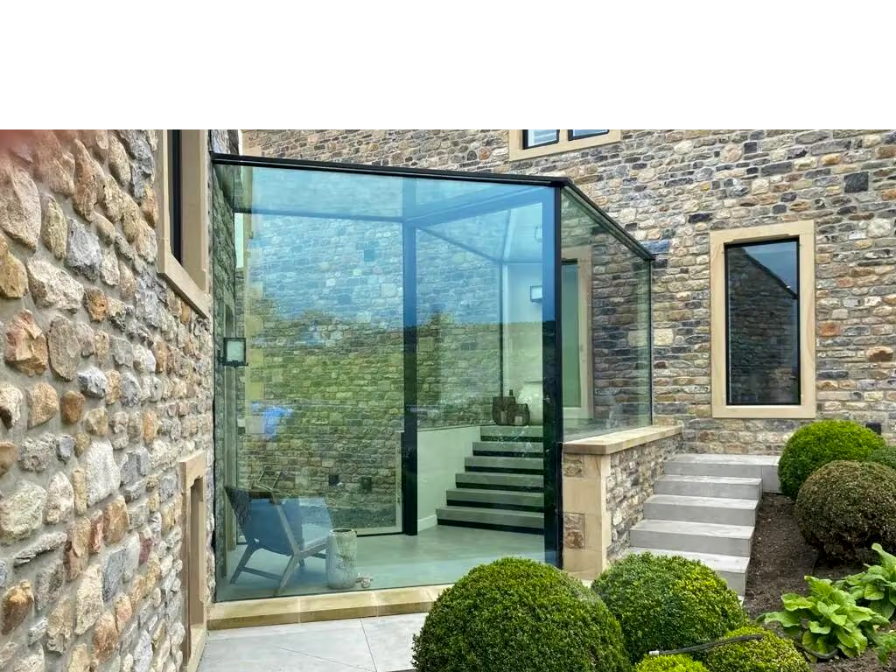
A frameless glass extension uses structural glass with minimal or hidden framing, so the corners meet glass-to-glass and the views are uninterrupted. This is the purest contemporary look: a clean glass box that lets the original house stay the hero. Frameless designs suit modern rear extensions, glazed links, and garden rooms where you want the structure to almost disappear.
Because the glass is doing structural work, these need careful engineering. Panes are sized for loads, junctions are detailed to stay weathertight, and the glass specification is chosen for both strength and thermal performance.
Framed and slim-framed extensions
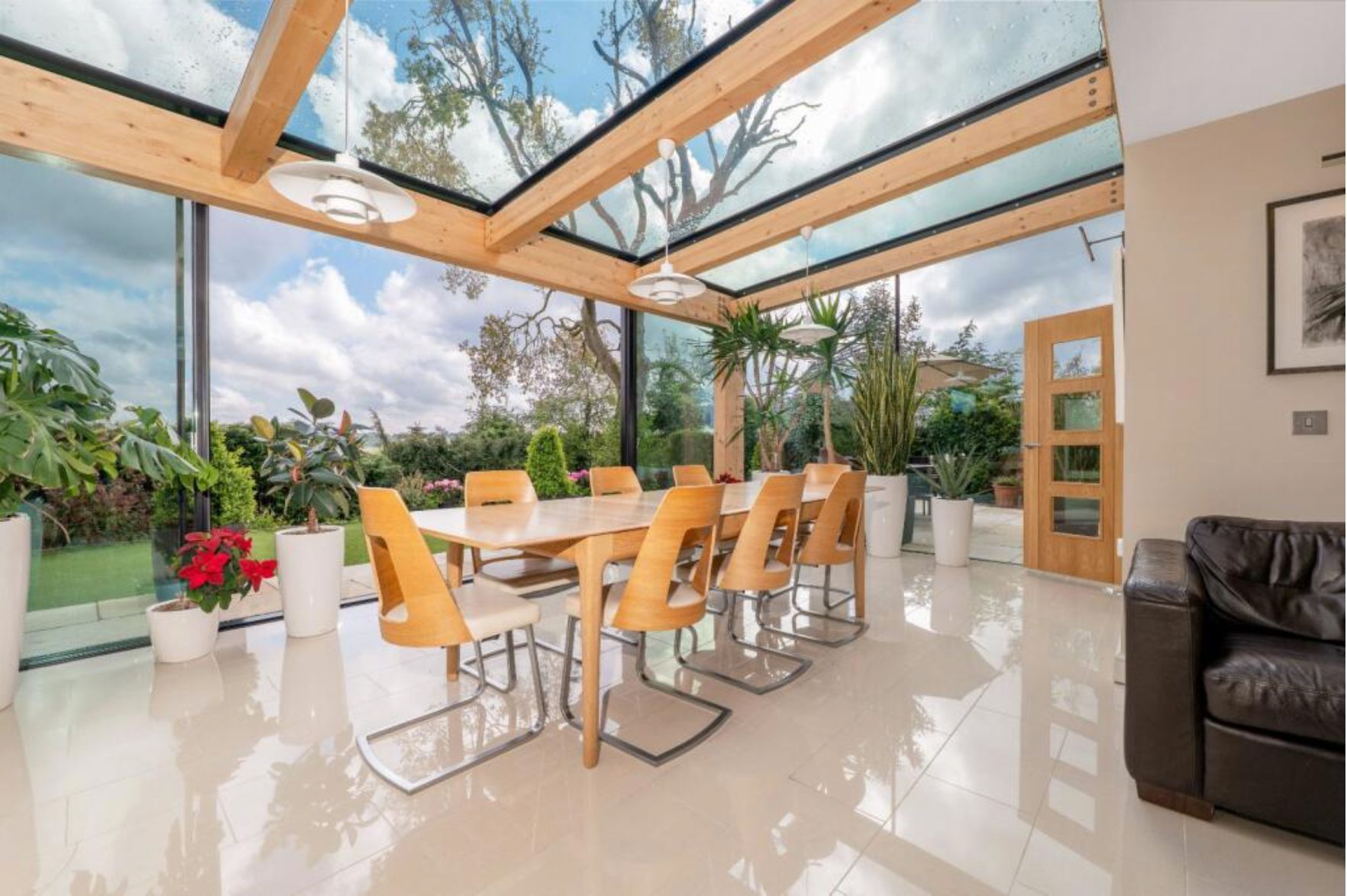
Framed extensions use slim aluminium or steel profiles to hold the glazing. Modern slimline systems give you large panes with very narrow sightlines, so you keep an airy feel while gaining flexibility on opening doors, structural spans, and budget. Slim sliding doors and steel-look screens pair beautifully with period properties as well as new builds.
Neither approach is better in the abstract. Frameless leans towards the most minimal aesthetic; framed gives you more options and often a gentler cost. Many of the best projects combine the two — a frameless roof over framed sliding doors, say.
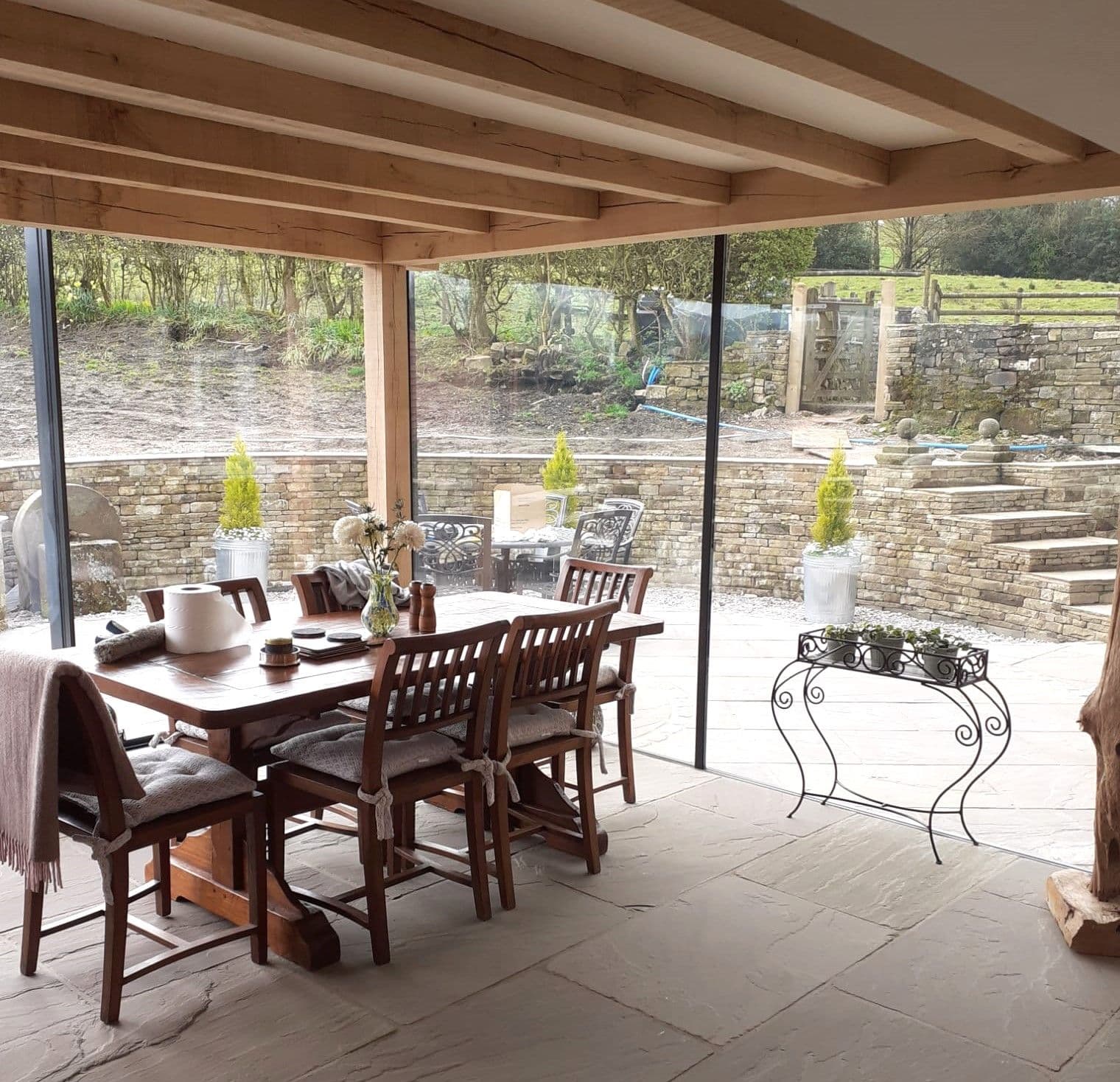
Types of glass extension to consider
- Frameless glass box extension — a fully glazed addition with structural glass corners; the most minimal, contemporary option.
- Structural glass extension — glass beams and fins carry load, allowing large spans with little visible framing.
- Glazed link or corridor — a transparent connection between two buildings, ideal for joining a barn, garage, or annexe to the main house.
- Glass box garden room — a standalone or attached room used as a snug, study, or dining space, designed to feel part of the garden.
- Slim-framed kitchen extension — large sliding or fixed glazing in narrow profiles, combining open views with practical wall space.
If you are weighing options, our glass box extensions and recent projects pages show how these work on real homes.
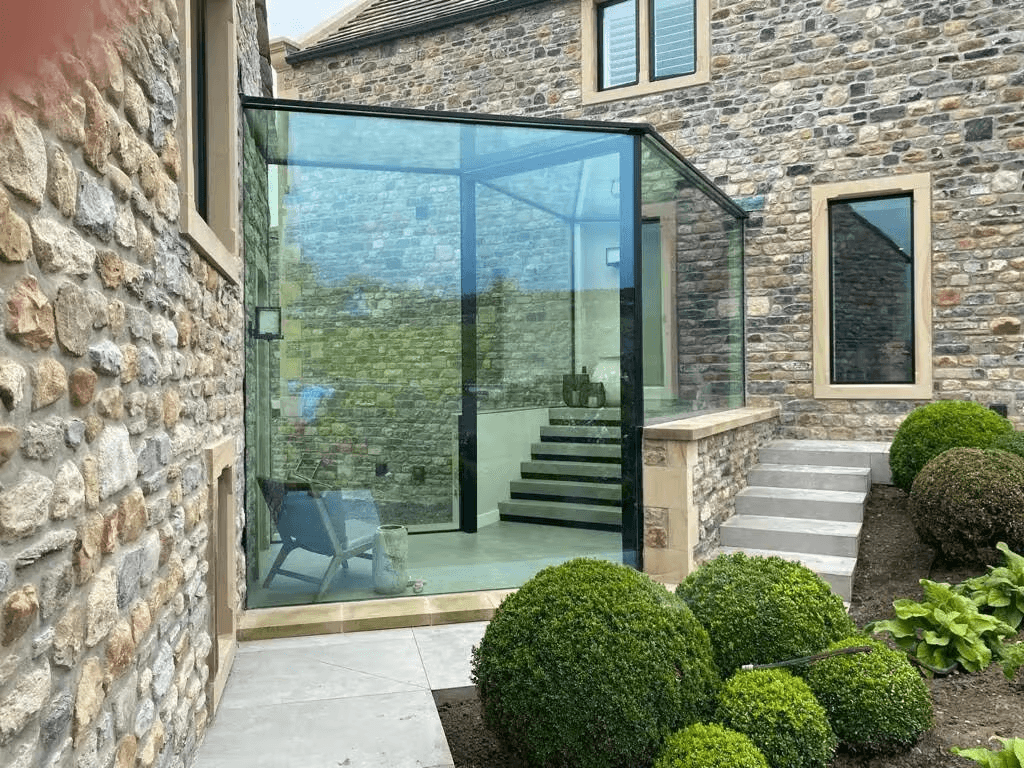
Contemporary and modern glass extensions on period homes
There is a reason modern glazed extensions look so good against older brick and stone. The contrast is honest — new glass alongside an original facade reads clearly as a new chapter, rather than a pastiche.
In Cheshire and across the North West we often add glazed extensions and links to period cottages, farmhouses, and barn conversions. A glass link is especially useful here: it joins old and new while keeping each part legible, and the transparency means the original elevation is still on show from inside and out.
Glazing performance: light, warmth, and comfort
A glass extension only works if it is comfortable all year. That comes down to specification, not luck.
Keeping warm in winter
Modern double and triple glazing units use low-emissivity coatings and warm-edge spacers to hold heat in. The framing matters too — well-detailed thermal breaks stop cold bridging at junctions. A properly specified glass extension is a usable room in January, not a summer-only conservatory.
Managing summer sun
South and west-facing glazing can overheat without thought. Solar-control coatings reduce heat gain while keeping the glass clear, and external shading, brise-soleil, or planting can help. Orientation is the first lever: we look at how the sun tracks across your plot before settling on the glass spec.
Glare, privacy, and acoustics
The same coatings that manage heat also temper glare. For overlooked plots, the geometry of the extension and the placement of solid elements can protect privacy without curtains. Laminated glass also dampens noise, which helps near roads.
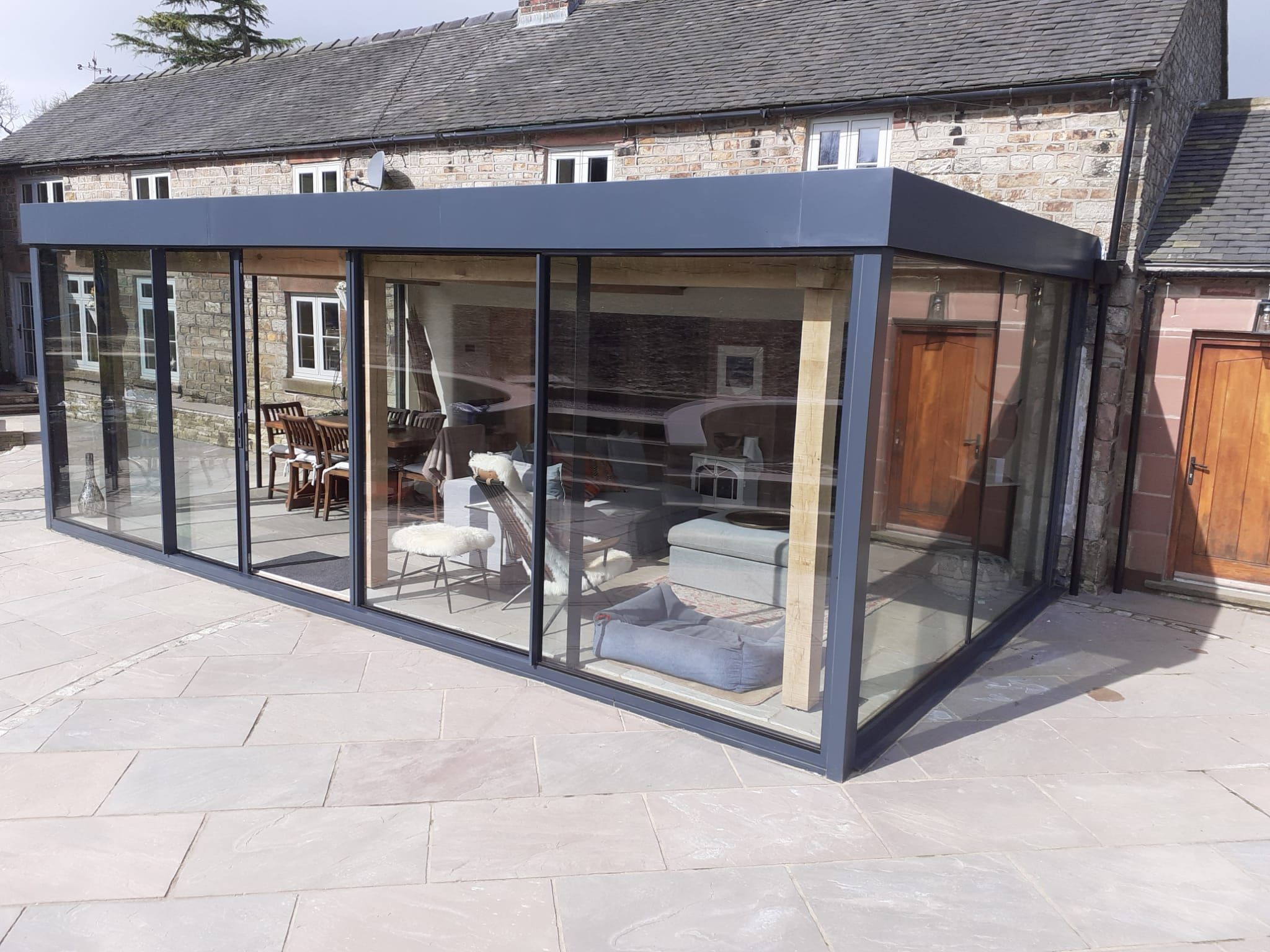
Planning and building regulations
Many glass extensions fall under permitted development, but it depends on size, height, position, and whether your home is listed or in a conservation area. Listed buildings and conservation areas almost always need consent, and that is where a glazed design often helps — a lightweight, reversible glass link can be more sympathetic to a historic building than a solid extension.
Whatever the route, the work must meet building regulations for structure, thermal performance, and safety glazing. We design with these in mind from the start and work alongside your architect and structural engineer so nothing comes as a surprise on site. Always confirm the planning position with your local authority before committing.
What to weigh up before you start
- ✔
Orientation and how the sun moves across your plot
- ✔
Frameless versus slim-framed, and where to combine them
- ✔
Glass specification for warmth, solar control, and acoustics
- ✔
Whether a glazed link suits joining old and new
- ✔
Planning status — listed, conservation area, or permitted development
- ✔
How you will use the room day to day and through the seasons
What to expect from design through build
Every project is different, but the shape of the journey is consistent.
- First conversation — we talk through your ideas, your home, and how you want to use the space.
- Design and detailing — working with you and your architect, we develop the glazing design, sightlines, and junctions.
- Engineering and specification — the glass and any structural elements are sized and specified for your loads and performance needs.
- Manufacture — units and frames are made to your exact dimensions.
- Installation — our team fits the glazing, weatherproofs every junction, and hands over a finished, watertight room.
Getting the specialist involved early pays off. The earliest decisions — where glass meets glass, how the roof drains, how doors slide — are the ones that define how the finished extension looks and performs.

Glass extension FAQs
Some fall under permitted development, but it depends on the size, height, position, and whether your home is listed or in a conservation area. Listed and conservation-area properties almost always need consent, so check with your local authority before you commit.
James Price Bespoke Glazing
Design a glass extension made for your home
From frameless glass boxes to glazed links and slim-framed garden rooms, we design and build glass extensions across the North West and throughout the UK. Tell us about your project and we will help you get the details right.