Glass Garden Rooms vs Conservatories: Which Is Right for You?
A practical comparison of frameless glass garden rooms and traditional conservatories — covering comfort, planning, looks and cost — to help you choose the right glazed extension.
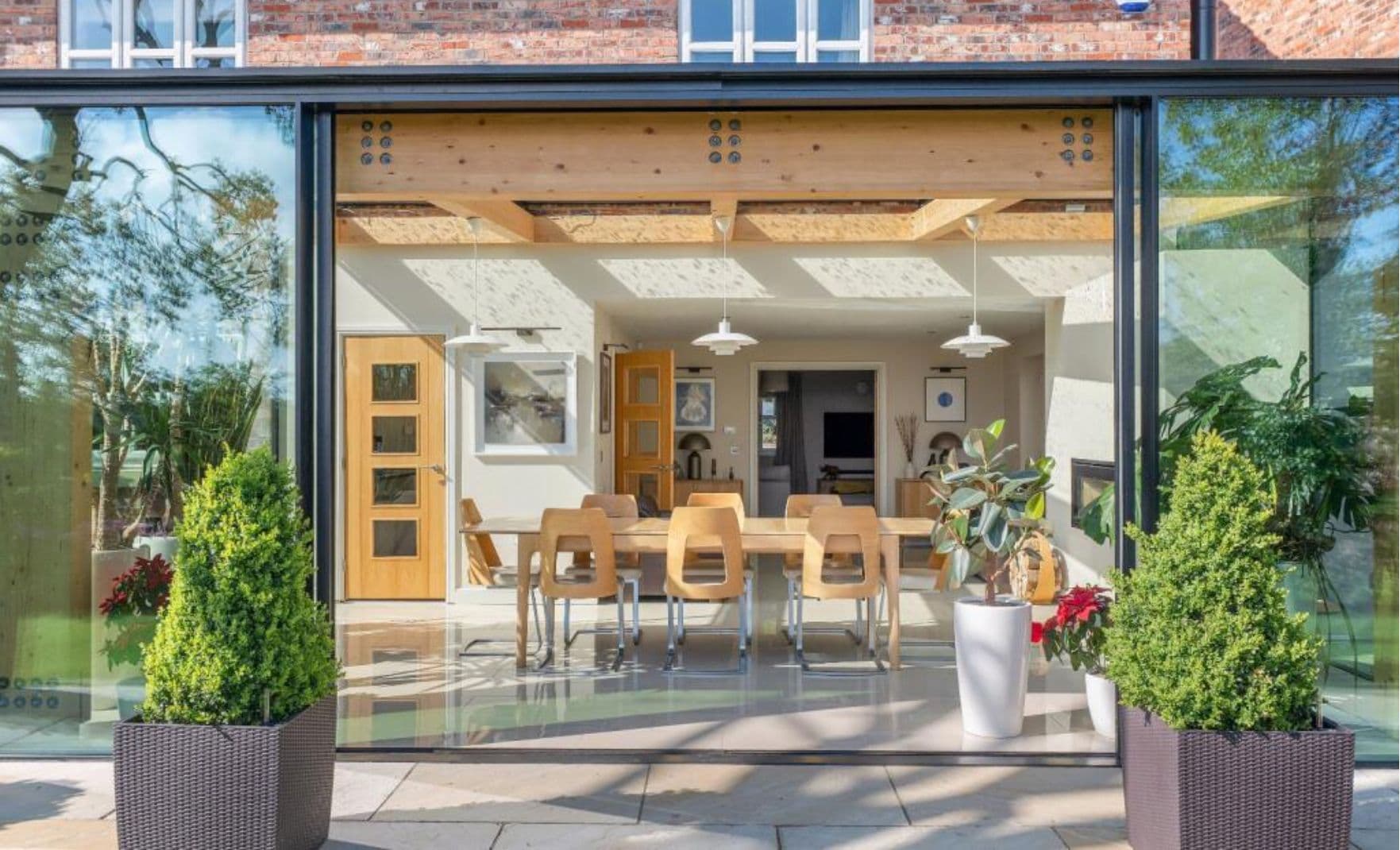
Glass garden rooms vs glass conservatories: which is right for you?
If you’re weighing up a new room that opens onto the garden, you’ll quickly run into two terms: the traditional conservatory and the modern glass garden room. They look similar in a brochure, but they behave very differently once they’re built onto your home.
The short version is this. A conservatory is a familiar, off-the-shelf style with a pitched glass or polycarbonate roof and a frame on every pane. A frameless glass garden room is a structural glass build with minimal sightlines, designed to feel like part of the house rather than an add-on. Both put you closer to the garden. They part ways on thermal performance, year-round comfort, planning, and the way they look against the original building.
This guide walks through the practical differences so you can decide which suits your home, your budget, and how you actually want to use the space. We design glass box extensions across Cheshire and the wider North West, so the comparisons here come from real projects rather than theory.
What is a glass garden room?
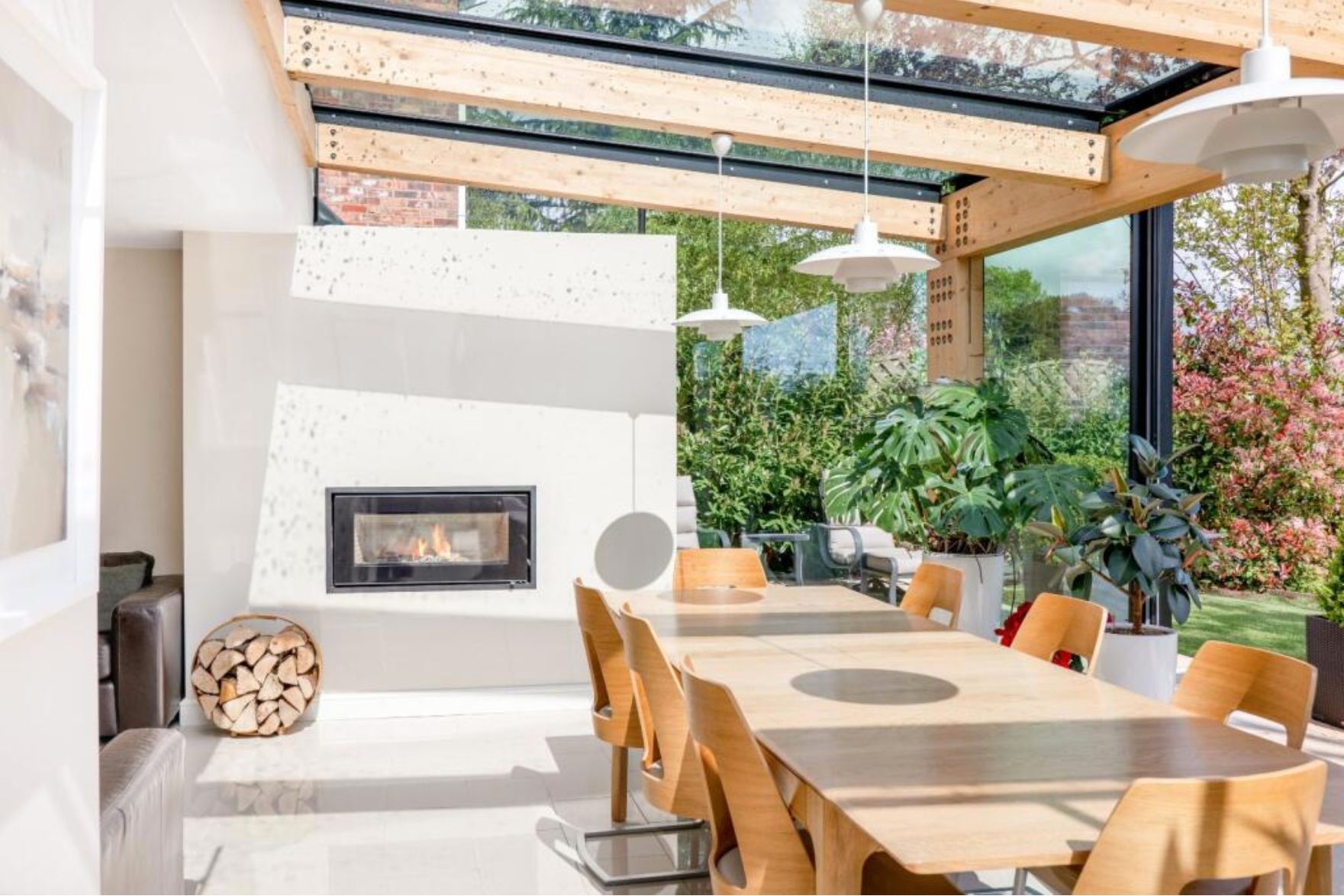
A glass garden room (sometimes searched as a glass box garden room) is a structural glass extension. The walls are large panes of toughened glass, often joined corner to corner with a clear silicone bond rather than a frame. The roof can be a single large rooflight or a flat glass span.
The result is a room that feels open to the garden but performs like a proper part of the house. There’s no chunky frame breaking up the view, and the glass does the structural work, supported by slim steel or aluminium where needed.
It’s the route most homeowners take when they want a kitchen-diner, a sitting room, or a quiet space that they’ll use all year, not just in spring and autumn.

What is a glass conservatory?
A traditional conservatory is usually a prefabricated or modular structure. It has a dwarf brick wall in many cases, framed glazing above, and a pitched roof in glass or polycarbonate. Frame materials are commonly uPVC or aluminium, and the design tends to follow a set of standard shapes — Victorian, Edwardian, lean-to, and so on.
Conservatories became popular because they’re a quicker, lower-cost way to add a glazed room. That’s a genuine advantage. The trade-offs show up in two places: how the space feels through a hot July or a cold January, and how it sits against the look of the original house.
The phrase glass conservatory box tends to come up when people want the airy feel of a conservatory but the cleaner lines of a modern glass box. That’s exactly the gap a structural glass garden room fills.
The real differences that matter
Thermal performance and year-round use
This is the big one. Older conservatories, particularly those with polycarbonate roofs, can overheat in summer and lose heat fast in winter. Many end up being used as a glorified porch for half the year.
A structural glass garden room is built with modern high-specification glass — typically double or triple glazed units, often with a solar control coating to manage heat gain. Done properly, the room stays comfortable across the seasons. We cover this in more detail in Are glass box extensions cold? and in our guide to solar controlled glass.
Appearance against your home
A conservatory reads as a separate structure bolted to the back. A frameless glass garden room is designed to feel continuous with the house — the floor often runs straight out, the glass meets at clean corners, and the eye goes to the garden rather than the framework. On a period property in Cheshire or a contemporary build, that difference is striking.
Build quality and longevity
Structural glass is engineered for the specific opening, with proper steel or aluminium support and high-grade seals. It’s a premium build, and it’s meant to last. A standard conservatory is generally a lighter, shorter-lived solution.
Cost
We won’t quote figures here because every project is different, but the pattern is straightforward: a conservatory is usually the cheaper starting point, and a structural glass garden room is a higher investment that buys better comfort, looks, and lifespan. For a fuller picture, see how much a glass extension costs in the UK.

When a glass garden room is the better choice
- ✔
You want to use the room every day of the year, not seasonally
- ✔
You care about clean sightlines and a build that matches a premium home
- ✔
You're extending a period property or a high-end new build
- ✔
You want a kitchen, dining, or living space rather than an overflow room
- ✔
Long-term quality and resale value matter more than the lowest upfront cost
Planning permission: what to know
Many glazed extensions fall under permitted development, but it depends on the size, height, position, and whether you’re in a conservation area or working on a listed building. A larger structural glass garden room may need full planning permission, and listed homes almost always do.
We handle this kind of detail on every project and work alongside architects to get the design through. If you’re connecting two parts of a home or a separate building, it’s worth reading how a glass link can connect two buildings too, since the same planning logic often applies.
For more background on why these rooms have taken off, our post on the rise of glass rooms in the UK is a good place to start.
So which one suits you?
If budget is the deciding factor and you’re happy with seasonal use, a traditional conservatory still has its place. It’s quick and affordable.
If you want a room you’ll genuinely live in through a Lancashire winter and a warm summer, with the look of a considered extension rather than an add-on, a structural glass garden room is the stronger choice. It costs more, but it performs and looks the part.
For most of the homeowners and architects we work with on premium projects, the glass garden room wins because it solves the comfort and appearance problems that put people off conservatories in the first place. Browse our projects to see how they look in real homes.
Frequently asked questions
Generally yes. A structural glass garden room is built with high-specification double or triple glazing and often a solar control coating, so it stays comfortable across the year. Older conservatories, especially those with polycarbonate roofs, tend to overheat in summer and lose heat in winter.
Bespoke glazing across the North West
Not sure which extension fits your home?
Tell us about your project and we’ll help you weigh up a frameless glass garden room against a traditional conservatory — honestly, with no pressure. We work across Cheshire, Lancashire, Greater Manchester and beyond.