Sliding Doors or Bi-Fold Doors? How to Choose for Your Extension
Large sliding doors and bi-fold doors both open a room to the garden, but they behave very differently. Here is how to choose between them.

Almost every extension we work on ends up with a big set of doors to the garden, and the first question is usually whether they should slide or fold. Both do the same job, which is to open the room to the outside, but they look different, take up space differently and suit different layouts.
This guide sets out the practical differences so you can choose with confidence. For more on a specific system, see our guide to Cortizo doors: Cor Vision sliding doors and bi-folds explained.
How each one works
A sliding door has large panes that run on a track, with one or more panes sliding past a fixed one. A bi-fold door has several narrower panels hinged together that fold back to one side or both sides. Sliding panes stay in one plane, so the door never swings into the room or the garden. Bi-fold panels stack, so they need space where they gather.
Views and sightlines
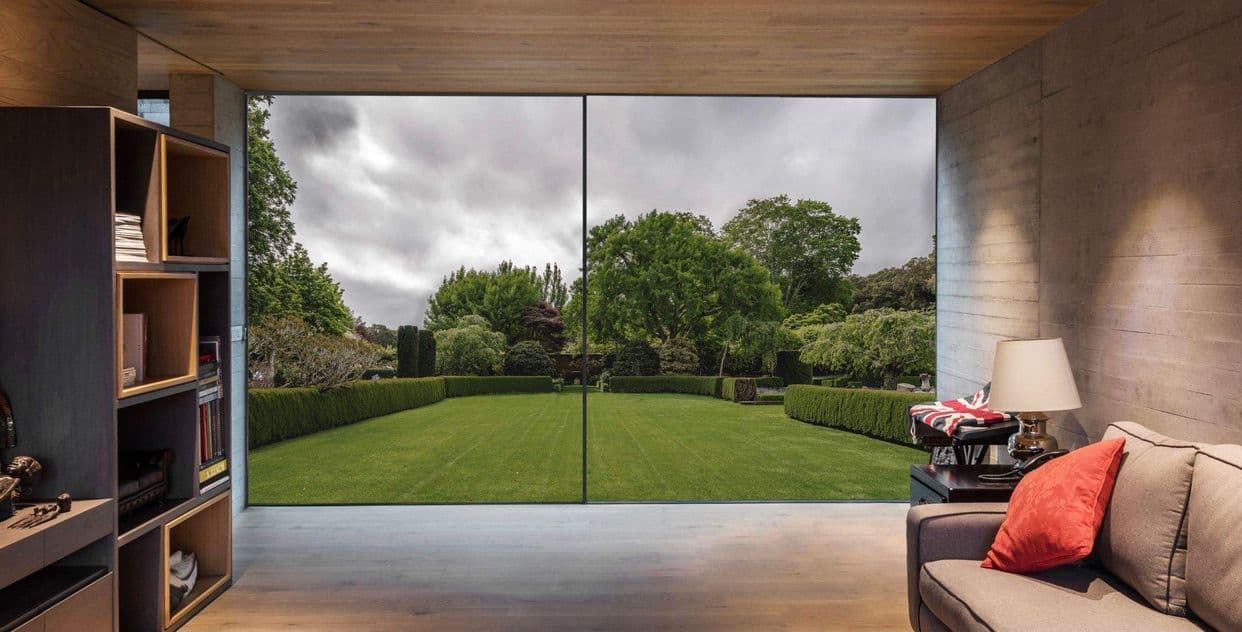
Sliding doors have fewer vertical frames, because each pane is wide. Slim-profile systems reduce the frame further, giving the largest possible area of glass. You can see this on our panoramic sliding doors and Cortizo sliding doors pages.
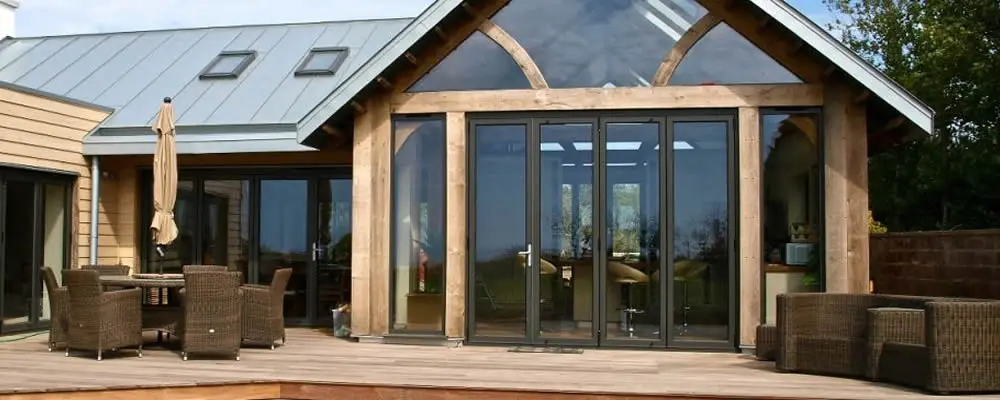
Bi-fold doors have more frames, because each panel has its own. When they are closed you see a regular rhythm of verticals. Many people like that look, especially on traditional or period houses, and it suits a more broken-up view.
Opening width
Bi-fold doors can open nearly the full width of the opening, which is why they remain popular for a free connection with the garden. Sliding doors open by the width of the moving panes, so a standard two-pane door opens roughly half the width. Multi-track systems and pocket systems that tuck panes into the wall can open more.
If you want the whole wall to disappear, ask for the open width of each option on your opening, not a general description.
Space inside and out
Bi-fold doors fold into a stack, and that stack needs space beside the opening. In a small room, furniture or a wall can get in the way. Sliding doors take no extra floor space, but you need the fixed pane or the wall alongside to hold the sliding panes when they are open.
Think about how you will use the doors on a day to day basis. If you step out onto a terrace often, a wide opening matters. If you mostly want daylight and the view, a large fixed and sliding combination gives you more glass.
Weather, security and maintenance
Good doors of both types can perform well, and quality varies more with the system and the installation than with the type. In general, sliding doors have fewer hinges and seals to look after, and bi-fold doors have more moving parts, so the hardware and its adjustment matter. Ask about drainage, seals, locking points and what service the manufacturer expects.
Size, weight and structure
Large sliding panes are heavy. The structure above the opening has to carry the load, and the floor under the track has to be level. Bi-fold panels are lighter individually but there are more of them, and the frame and threshold need careful detail. Whichever you choose, the opening should be designed with the doors in mind, not the other way round.
Thresholds
Both types are available with low or flush thresholds, which let the floor run from inside to outside and help with level access. The threshold detail has to handle rain, so ask how water is drained and what the finished level looks like on both sides.
What affects the cost
We do not quote without seeing the opening, but you can think about the factors. Door size, number of panels, glass specification, frame finish and hardware all move the price. Bi-fold doors have more frames and hardware. Large sliding doors use bigger panes and heavier glass. Our post on what affects the cost of a glass extension covers how doors fit into the wider budget. You can also see the options on our aluminium bi-fold doors and Cortizo bi-fold doors pages.
Which suits which room
Sliding doors suit contemporary rooms where you want the biggest panes of glass and the slimmest frames, and rooms where a stack of folded panels would be in the way. Bi-fold doors suit rooms where you want the widest possible opening to a terrace, or a look with more rhythm. In a glass extension with minimal framing, sliding doors usually sit more quietly in the design. In a house with more traditional proportions, bi-folds can look right.
Ask to see both on a drawing of your own elevation. It is much easier to decide from your own wall than from a catalogue photograph.
Questions to settle before ordering
- ✔
How wide do you want the open gap to be?
- ✔
Where will folded panels stack, or sliding panes sit?
- ✔
How much frame are you happy to see when closed?
- ✔
What threshold do you need for level access?
- ✔
How will the structure carry the weight of large panes?
Sliding and bi-fold door questions
Neither is better in every case. Sliding doors give larger panes and slimmer frames, and bi-folds give the widest opening. The room layout and the look you want decide it.
Doors to the garden
Not sure whether to slide or fold?
Send us your opening dimensions and a photo, and we will advise which system suits the room.