Structural Glass Wall Systems for the Modern Home
How structural glass wall systems work, where they suit a home, and how we collaborate with architects on premium residential projects across the North West.
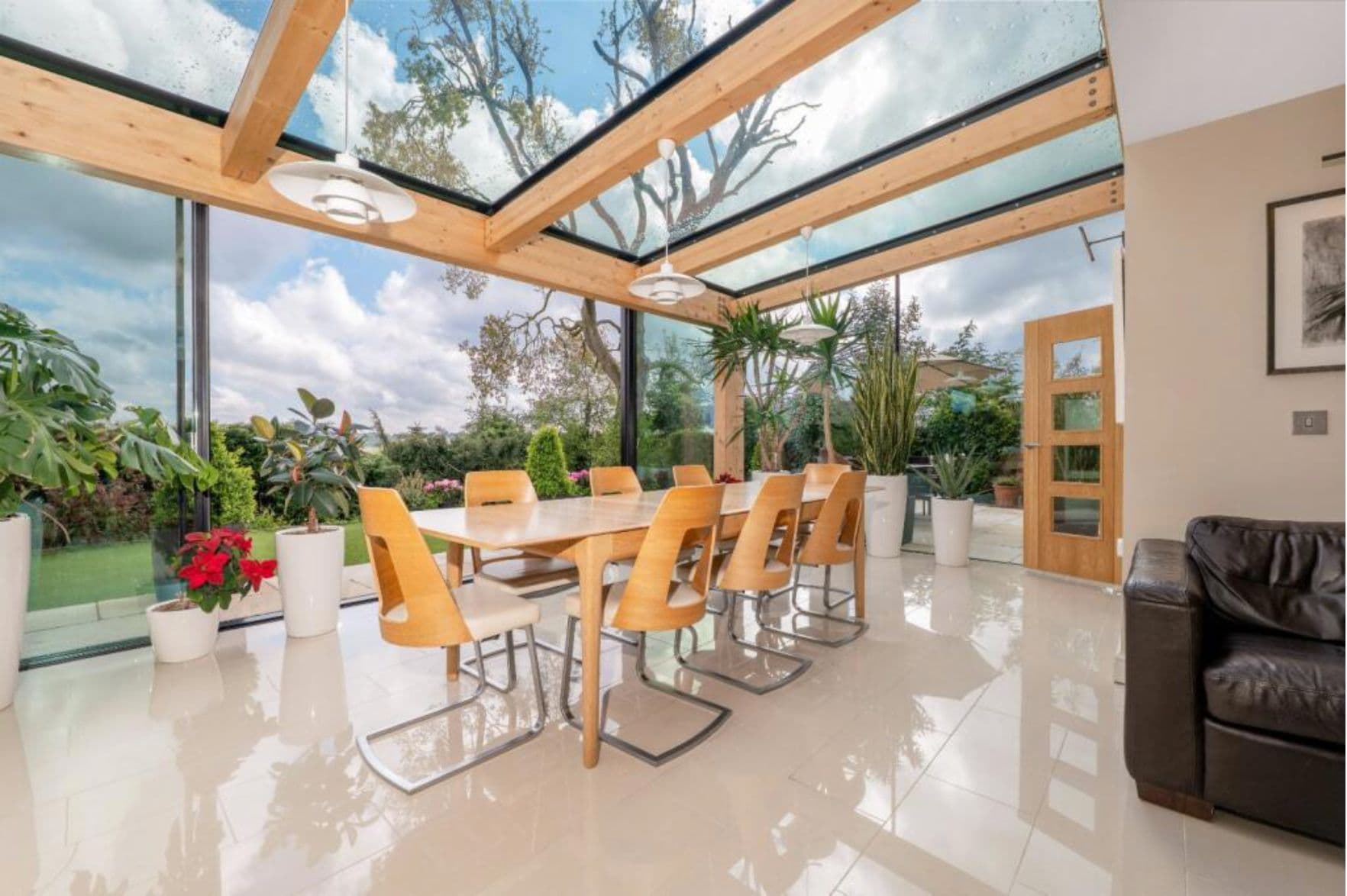
Structural glass wall systems for the modern home
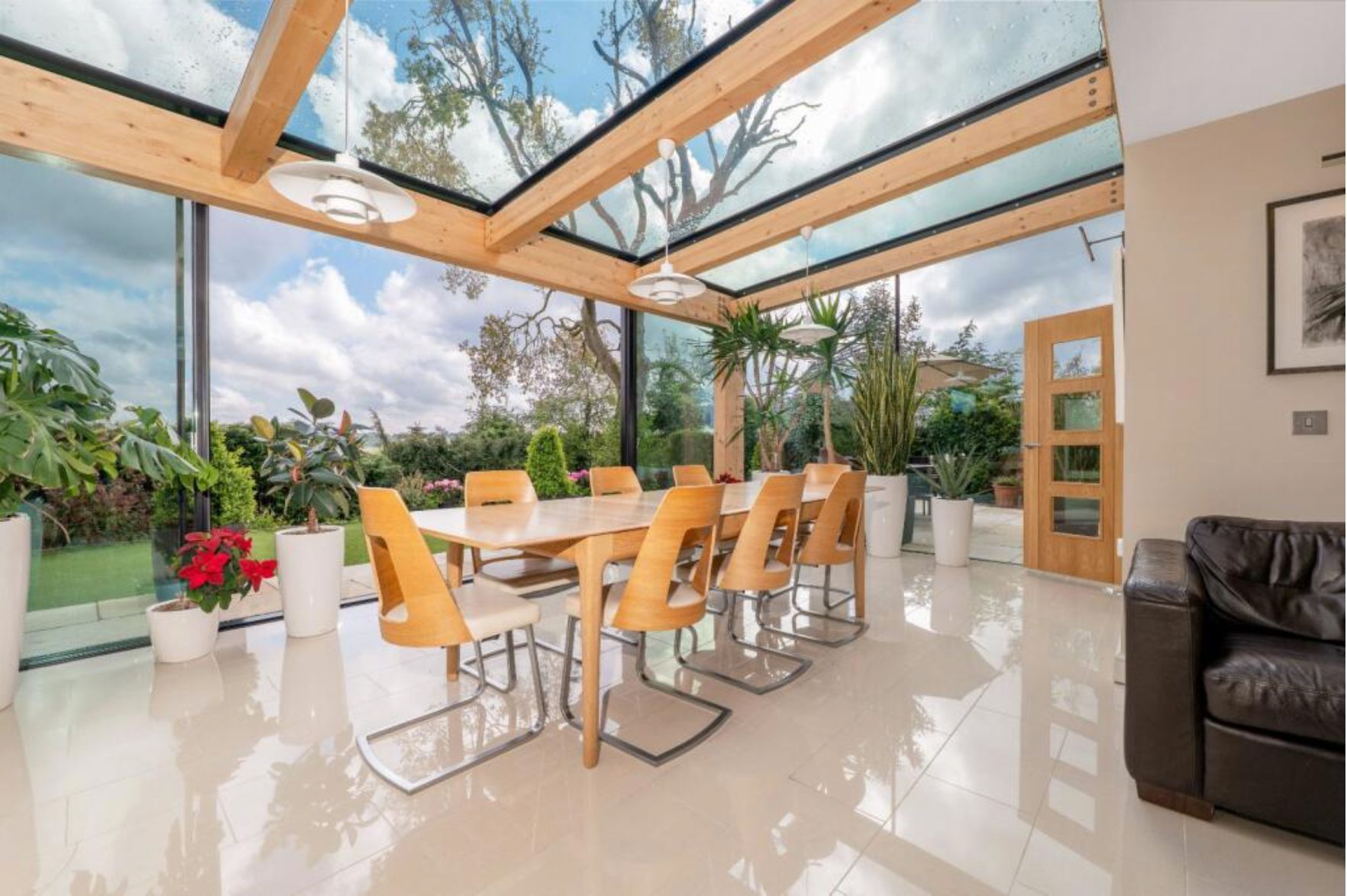
A structural glass wall does away with the bulky frames and visible columns you’d normally expect, replacing solid masonry with full-height panes that carry their own load. The result is a wall of glass that frames the garden, pulls daylight deep into the house, and quietly blurs the line between inside and out.
We design and install structural glass wall systems for premium homes across the North West — Cheshire, Greater Manchester, Lancashire and Merseyside — and work alongside architects on extensions, renovations and self-builds. This guide covers how these walls work, where they suit a home, and how we collaborate with your design team to get them built.
What makes a glass wall “structural”
In a structural glass wall, the glass itself does some of the work. Instead of relying on a metal frame to hold everything up, toughened or laminated panes are sized and fixed to take wind load and, in some cases, support the structure above.
That usually means:
- Large panes with minimal or no visible framing
- Glass fins or slim steel supports where extra rigidity is needed
- Silicone or stainless fixings that keep sightlines clean
Done properly, the glass reads as a single calm plane rather than a grid of frames.

Where a structural glass wall works in a home
These systems earn their place where the view or the light matters most. We see them used for:
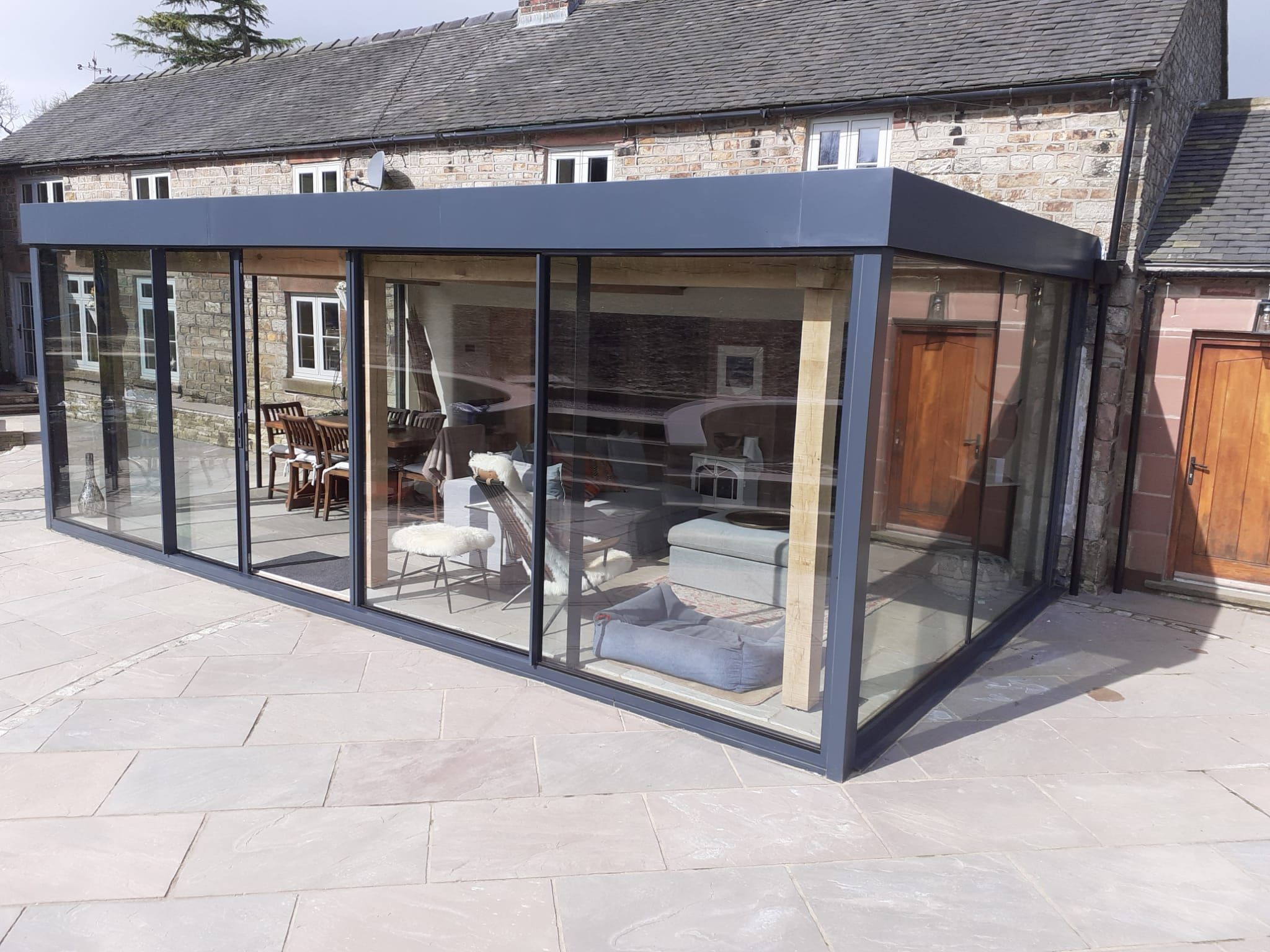
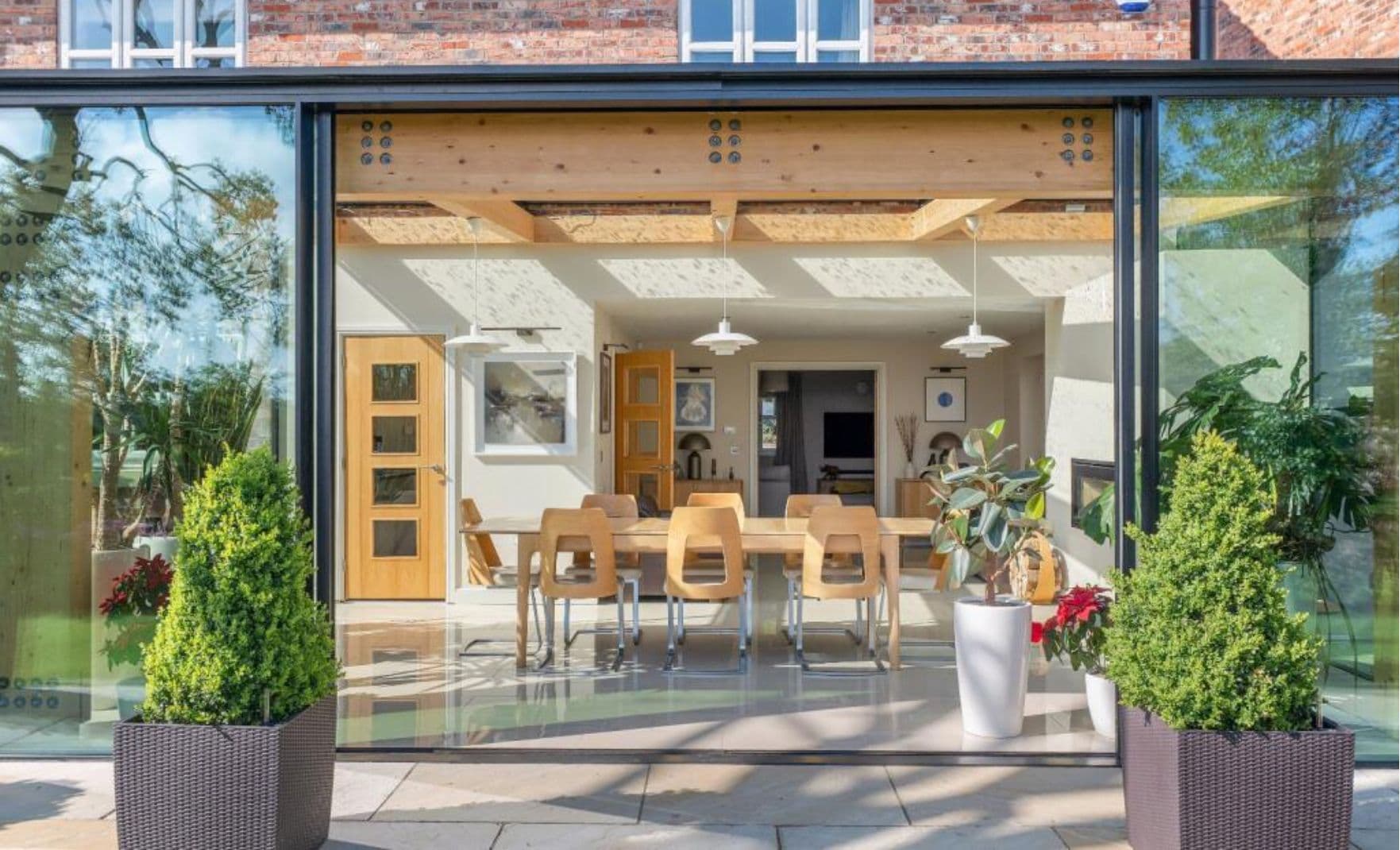
- Rear extensions opening a kitchen or living space onto the garden
- Glass links joining an older property to a new wing without competing with the original brickwork
- Double-height gable walls in self-builds, where a single sheet of glazing fills the gable
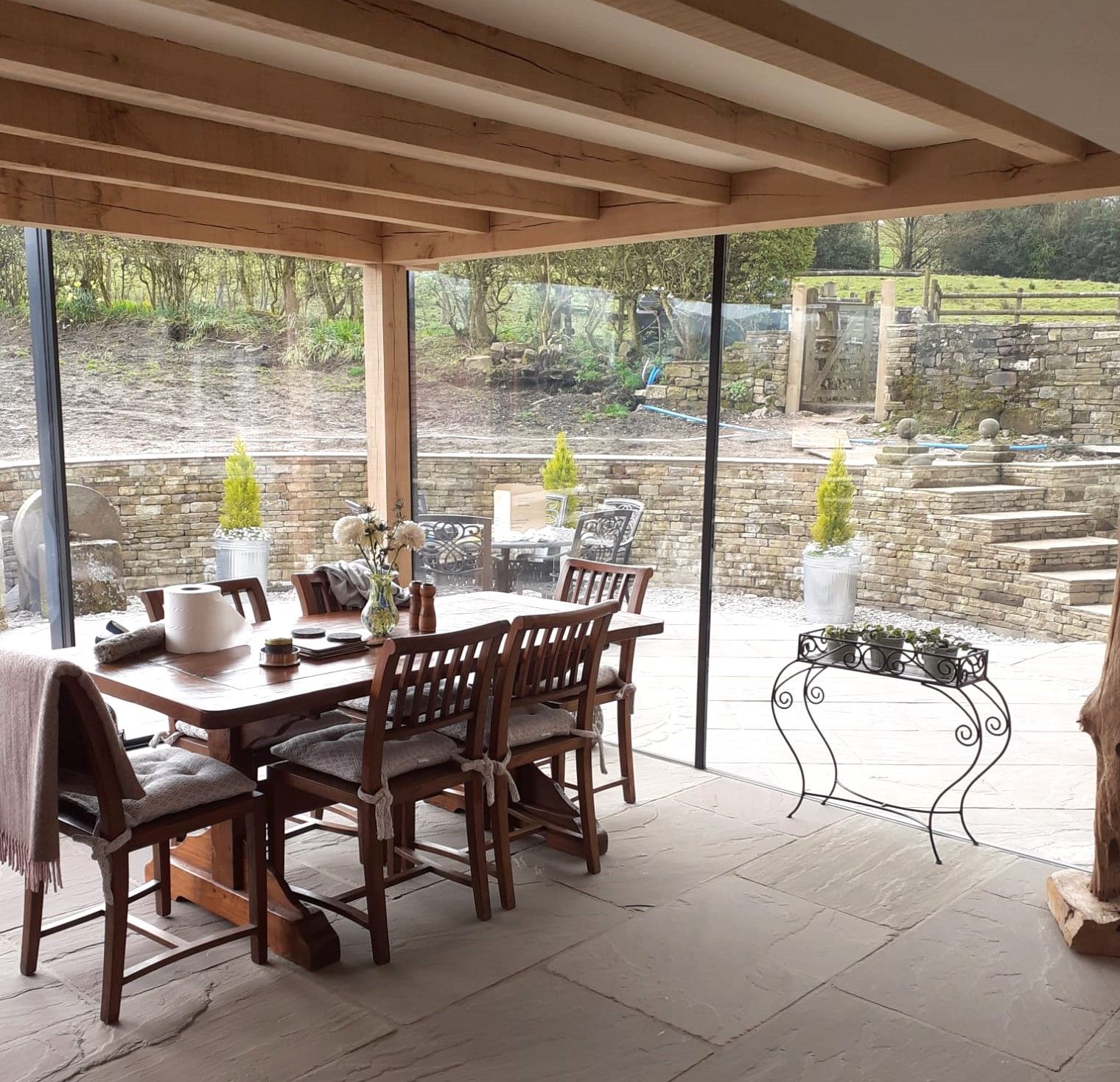
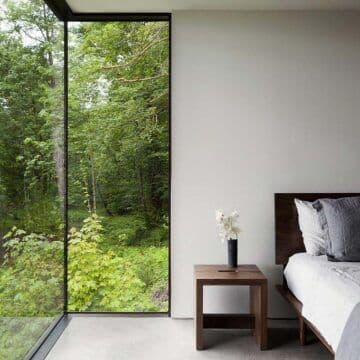
- Corner glazing that removes the post where two walls meet, so the room opens up on two sides
They pair naturally with rooflights and roof glazing overhead, and with slim sliding doors where you also need the wall to open.
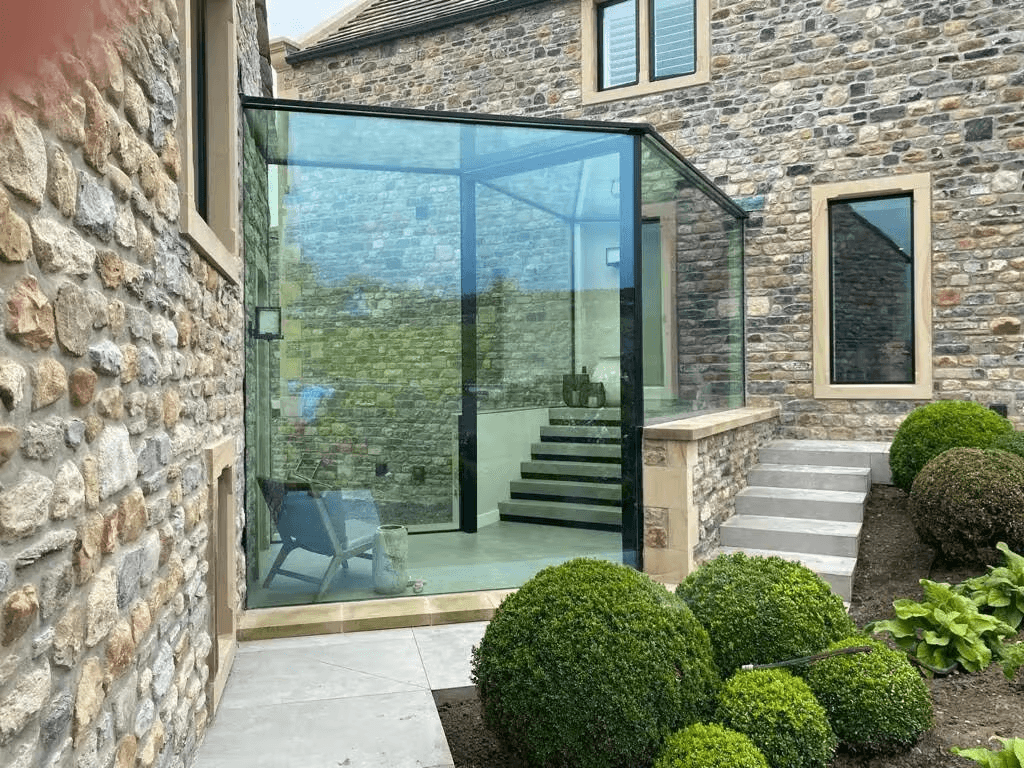
How we work with architects
Most of our projects come through an architect, and our job is to make their design buildable in glass without compromising the look they’ve drawn.
Early input on what’s possible
Glass has limits — pane sizes, weights, and how much load a panel can carry. Bringing us in at concept or planning stage means we can advise on realistic spans, fixing details and where a fin or slim steel support is needed, before the drawings are committed. That avoids redesign later.
Detailing and structural coordination
We work to the architect’s intent and produce the fabrication detailing to suit. Where the glass interacts with the structure — a beam above, a slab edge, a threshold — we coordinate so the junctions are weathertight and the sightlines stay as slim as possible. For load-bearing situations we’ll work with the project’s structural engineer on the relevant calculations.
Survey, manufacture and install
Once details are agreed we survey, manufacture, and install with our own teams. Keeping that under one roof means the person who measured the opening is accountable for the finished wall fitting it.
What to weigh up before you specify
- ✔
Thermal performance — modern double or triple glazing keeps a glass wall comfortable year-round
- ✔
Solar control coatings to manage heat gain on south-facing elevations
- ✔
Privacy and overlooking, especially in tighter Cheshire and Manchester plots
- ✔
Cleaning and maintenance access for large panes
- ✔
How the wall meets the floor, roof and any opening doors
Corner glazing and glass-to-glass joints
One of the most striking details is the glass-to-glass corner — two panes meeting with a bonded silicone joint and no post between them. From inside, the room appears to open straight out at the corner.
It’s a detail that needs the right glass specification and careful setting-out, but it’s exactly the kind of feature where an experienced glazing specialist alongside the architect makes the difference between a clean line and a compromise.
Structural glass wall systems: common questions
No, not when they’re specified properly. Modern double or triple glazing with a warm-edge build and a low-e coating keeps a glass wall comfortable through a North West winter. The key is matching the glass spec to the orientation and the room.
Bespoke glazing, North West
Planning a glass wall for your home?
Send us your drawings or your ideas and we’ll advise on what’s achievable in glass — working alongside your architect from concept to install.
Related Content
Discover more content related to this blog
A plain summary of the 2027 Part L changes as they affect windows, doors, rooflights and glazed extensions — dates, transitional rules, the numbers that moved and the ones that didn't, and what to do on live projects now.

Part O caps the glazed area of every new home room by room, by orientation and ventilation. The moderate-risk figures for Liverpool, Manchester and the North West, what happens when a design exceeds them, and how to keep the big glass.

From 24 March 2027 every window on a new home must be calculated at its real size with every frame component included. What changes, who it catches, and how steel, aluminium and structural glass get to 1.2 W/m²K.
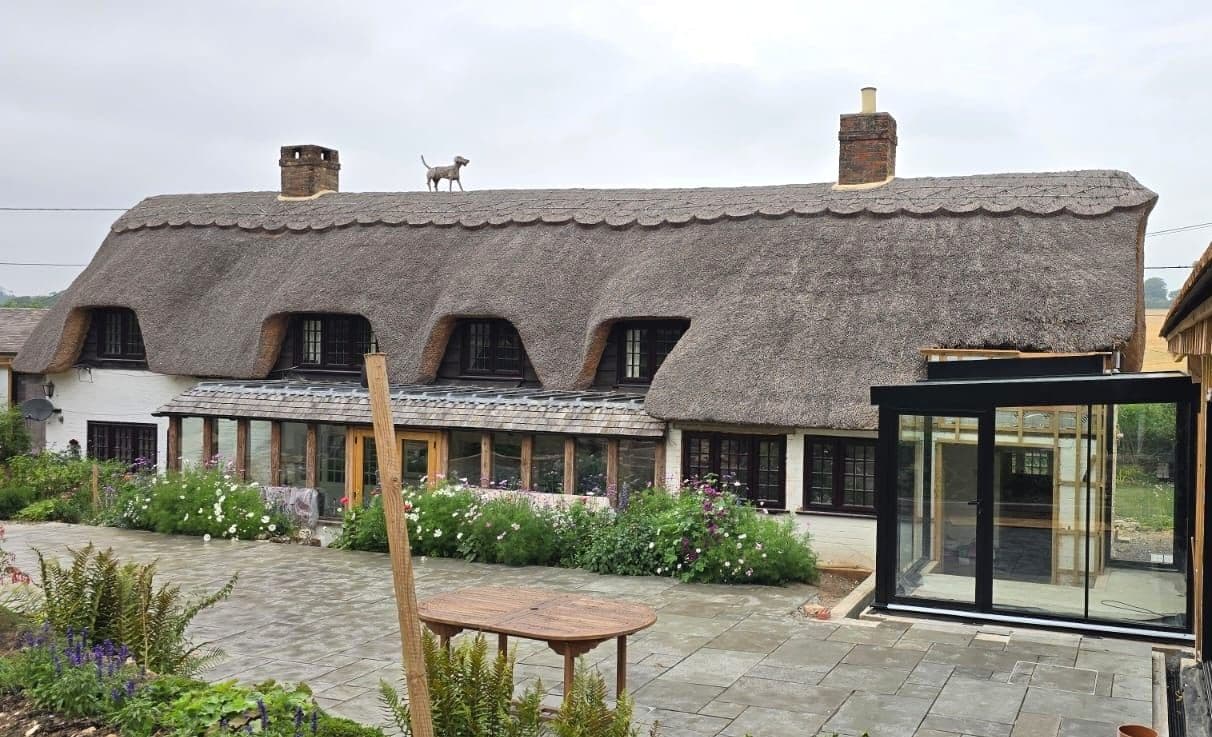
Most of the houses we glaze are old. Georgian terraces in Liverpool, Victorian villas in Cheshire and South Manchester, stone farmhouses in Lancashire and the Dales. Here is why structural glass tends to be the extension that gets approved on a period home, and how the old wall and the new glass are made to meet.
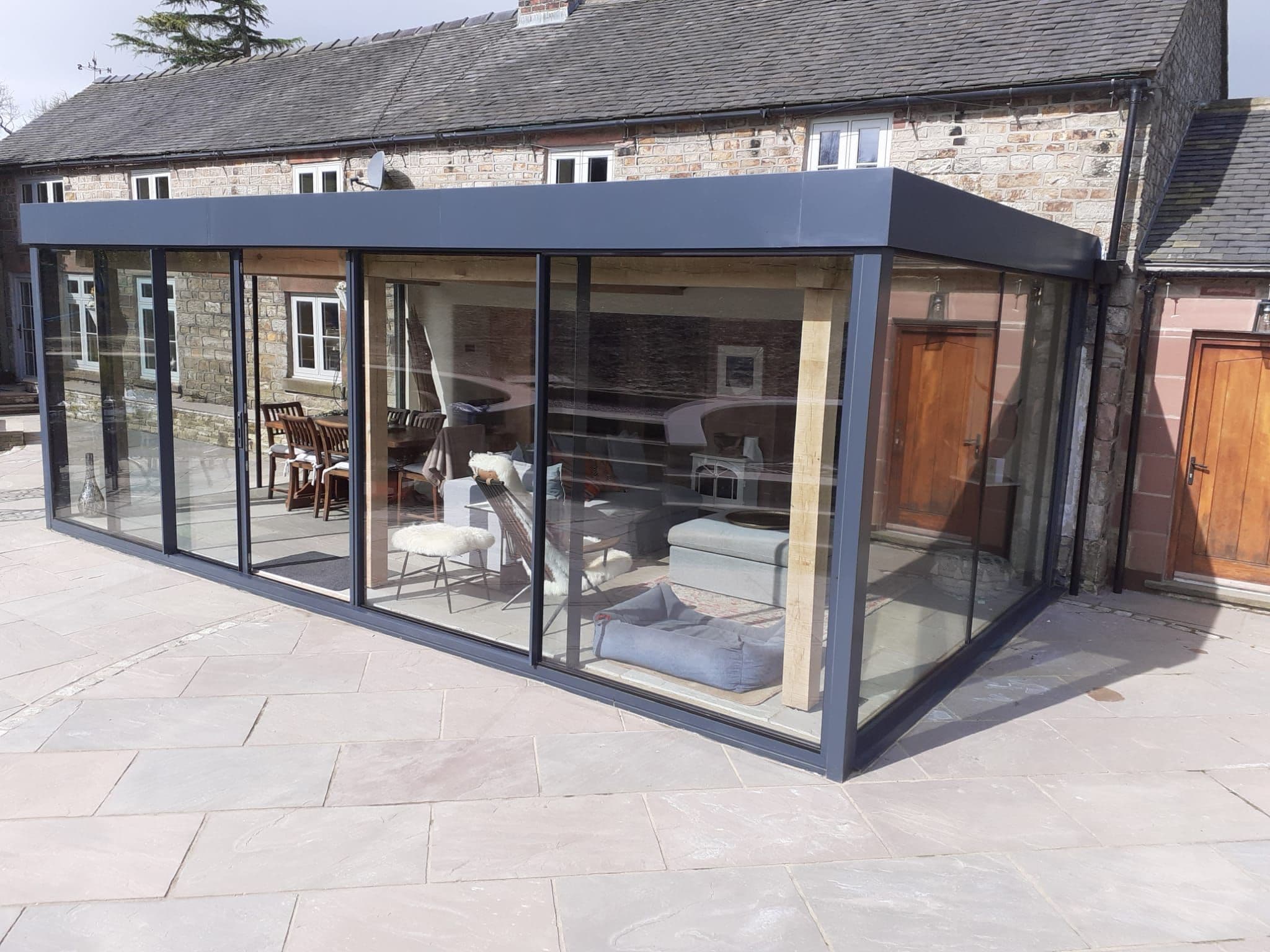
People planning a glass box, link or corridor usually want to know two things: how long it takes and what happens in between. This is the sequence every one of our North West projects follows, from the first site visit in Cheshire, Lancashire or Merseyside to the day the glass goes in.
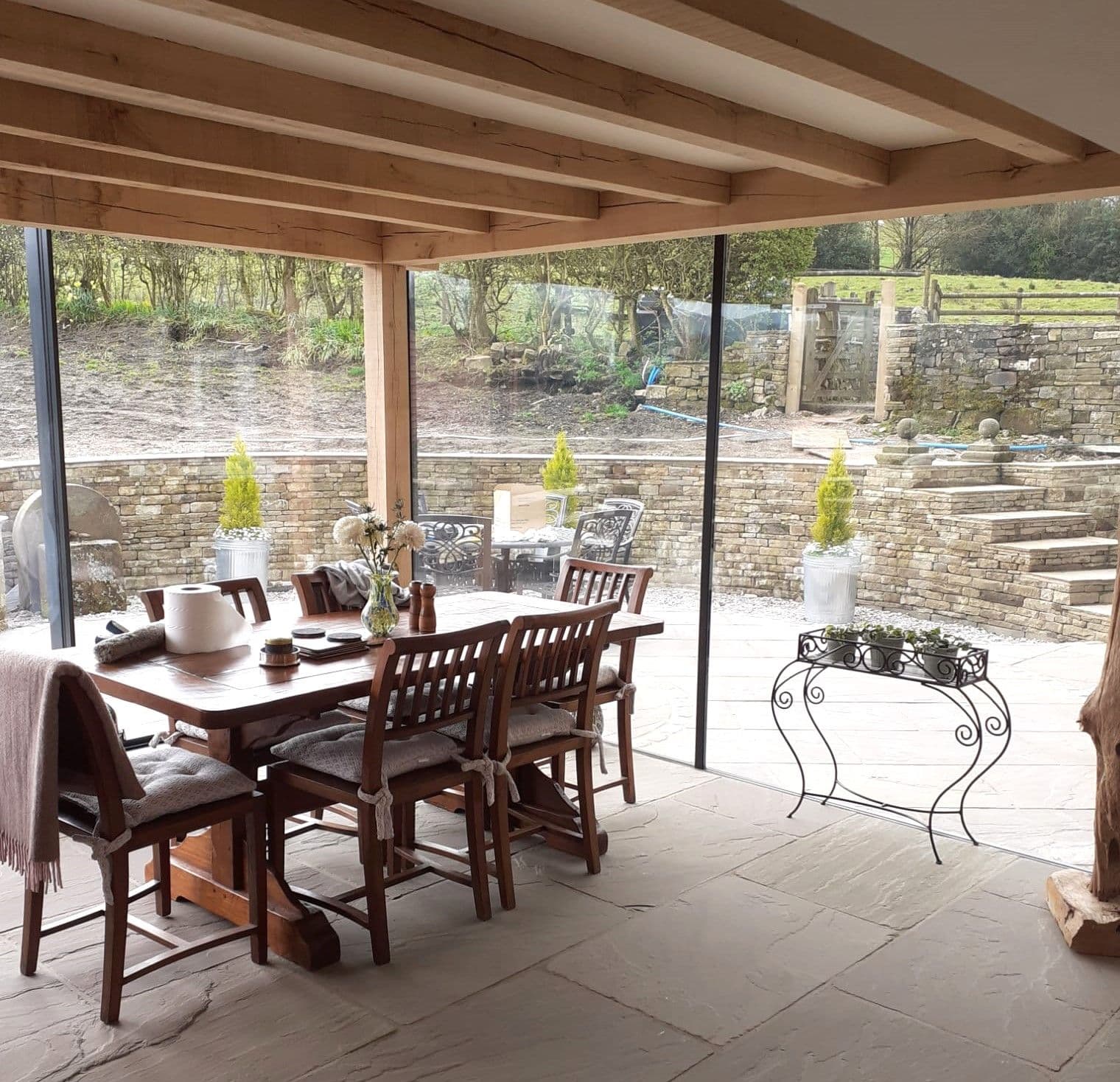
The two worries every client raises about a glass room are that it will be freezing in winter and a greenhouse in summer. Both used to be true. Here is how modern structural glazing is specified so that neither is — and what we watch for on North West projects in particular.